


Each year we ask the world’s leading SEOs to share their number one actionable tip for the upcoming year. This makes our SEOin2026 guide a great way to learn from the best in the business and to help you stay one-step ahead of your competitors as we head into a new year.
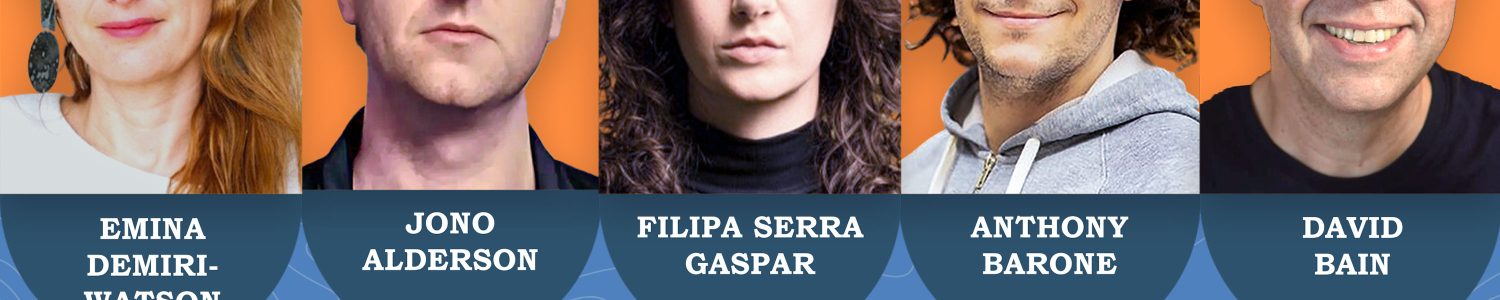
For this special episode of the Majestic SEO Panel Show our host David Bain was joined by Emina Demiri-Watson, Jono Alderson, Filipa Serra Gaspar and Anthony Barone to preview the SEOin2026 book.
Watch On-Demand
Listen to the Podcast
Transcript
David Bain
Hello and welcome to the December 2025 edition of the Majestic SEO panel, a sneak preview of SEO in 2026. I’m your host, David Bain, and joining me today are four wonderful guests. Let’s meet them, starting with Jono.
Jono Alderson
Hi, I’m Jono Alderson. Thanks for having me. I’m excited to be here to talk about this incredible book.
David Bain
Emina, thanks so much for joining us as well. Who are you and where are you from?
Emina Demiri-Watson
Hi, I’m Emina. I’m the head of Digital Marketing at Vixen Digital, and you can find me mostly on LinkedIn or on our website Vixendigital.com.
David Bain
Thanks for joining today. Filipa, hello.
Filipa Serra Gaspar
Hello everyone. Thanks for having me. My name is Filipa, and I’m currently doing SEO and ASO at Zooplus, which is an e-commerce site for the pet industry. You can find me on LinkedIn or on my website, SEOlipa.com.
David Bain
Thank you so much for joining Filipa. And also with us today is Anthony.
Anthony Barone
Hello everyone. I’m Anthony co-founder and MD of StudioHawk here in the UK. I’m glad to be part of this for the third year in a row, and people can find me on LinkedIn, at Anthony Barone or at StudioHawk.co.uk.
David Bain
Thanks everyone for joining. So these are four of the contributors to the forthcoming book, SEO in 2026. We’re recording this live on December 3rd, 2025, so as of then, in a week’s time, on December the 10th, the book is due for publication. You can go to SEOin2026.com for more information about that.
We have about 64 of the incredible contributors joining us live for launch day. This is a special pre-show because these four contributors here today couldn’t quite make the 10th, but it’s wonderful that they can come on this particular quick show instead.
Now SEO in 2026 is an enormous book, and it’s a book that’s going to be roughly 700 pages long. It’s going to be about 230,000 words long. So there’s a lot to consume between December the 10th and Christmas. You have to get through it. That’s the rule. It has to be read before Christmas. And hopefully you can join us for that particular live stream.
But today, we’re going to just summarize the four tips from the four great guests that we’ve got today that they shared as part of the book, and also get their thoughts on maybe some other tips that also are included within this SEO in 2026.
So Jono, alphabetically, and for no other reason, would you perhaps like to start off today’s episode by sharing your tip for SEO in 2026?
Jono Alderson
My tip is that we should stop accepting and normalizing technical mediocrity.
I think for a long time, we’ve all just kind of learned to live with the web being a bit janky, and websites having loads of error pages and broken links and 20 megabyte JavaScript files and rendor-blocking, blah, blah, blah, blah, blah, and all of this has become normal, and both as users and SEOs, we just seem to be okay with that, right? Like, I’ve added the thing to the cart, oh, the page is frozen, oh, I’ve gone on it but, oh, it’s broken and why is that okay?
For a long time, it’s been okay because Google has been quite tolerant of that sort of thing, and we’ve got away with it, and that’s fine. That’s cool. But now the world starts to change, and agentic systems and whatever comes next are going to be far less error tolerant, and users expectations will increase, and neither people nor these systems will wade through these bad experiences.
I think many businesses and websites are saying that they’re struggling because of increasing competition or changing markets or the rise of AI. Actually, the reality is that many of them are failing because they’re held together with little more than a hope and masking tape. They’re not doing the hard work of actually investing in their core architecture and making sure that they have the right tech stacks and that they’re not just kind of living in condemned properties.
So yeah, I’m super frustrated that we just kind of normalize that the web is bad. Maybe it’s time to do something about that.
David Bain
So Jono, how do you start de-janky-fying a website?
Jono Alderson
Well, as with many things we’ll touch on in this, SEO professionals are best positioned to have these difficult conversations. I think we we’ve got quite good at talking about content strategy and digital PR and maybe broadly technical SEO. Many organisations aren’t prepared or equipped or educated to understand the problem and how bad it is.
But WE have the tooling and the expertise to say, You know what that four second wait for that JavaScript file to load is going to cost you user experience, which is going to impact how users perceive you, which is going to impact how Google perceives you, which is going to impact whether or not you’re recommended by LLMs, et cetera.
We have the connections, the remit, the terminology, the understanding, the connections, to have those hard conversations and actually just being able to challenge people like developers (who everybody loves) and say, you know, it’s not okay to use entirely client-side rendered stuff for your key content, and it’s not okay to accept a four second LCP score and to be more bullish on not accepting that kind of mediocrity and the normalization of it.
Having the hard conversations with senior business leaders and saying you need to invest, re-skill, or invest more in talent, etc. You need to hold people accountable. For far too long, we’ve just let “devs do dev”, and the world is not good as a result.
David Bain
Wonderful. That was the summary of Jono’s tip for SEO in 2026. Jono’s whole episode will be available on SEOin2026.com. All the episodes, all the podcast episodes, the video episodes, will be published five days a week from the 8th of December onwards, and the book, of course, will be published in the 10th of December.
Emina, you are the next panellist that I’d like to ask: what was your number one SEO tip for 2026?
Emina Demiri-Watson
So my SEO tip was really going back to kind of the basics, so focusing on audiences so we can avoid being bogged down.
There’s so many shiny objects around that we all want to play with, and I’m first in line for them. However, it does mean that we’re in danger of forgetting the basics and the foundational stuff, which is your audience.
I have an MA in Development Studies, and every time I think about marketing, I remember how one of my favorite teachers was talking about a program called Community-Led Total Sanitation. So basically, there was a lot of aid agencies who went to African countries, and built toilets that nobody used, and for years and years, have spent a lot of budget on these toilets that nobody was using, till somebody had a really good idea that turned into this Community-Led Total Sanitation, where they went into the community and did what’s called community mapping, which is a participatory technique, where they got them to basically map out their local areas and where the where they go to the toilet, where the rivers are, where their water supply is, where their kids play, so they’ve done the mapping, and they themselves, so the community themselves understood finally why they shouldn’t be defecating near the water supply, near where kids play and so forth. So it was a facilitation process, rather than going top-down.
And I see it in marketing all the time. We are always trying to build toilets the way that we want toilets to be built, rather than doing what our audience actually wants.
David Bain
And what if our audience don’t know what’s best? I’m always reminded of Steve Jobs quoting Henry Ford, saying, “If I’d asked people what they wanted, they would have they were told me they wanted a faster horse instead of a car.”
Emina Demiri-Watson
There’s a difference there. The African communities didn’t want the toilets. There’s a difference between facilitation and not listening to your audience at all. So, the way they have you approach marketing is by understanding your audience. And yes, in understanding your audience, you might discover that what they want isn’t actually what they need. And then it’s your job to come in and basically educate and facilitate so that those “toilets” are actually built the right way.
David Bain
Thanks for sharing that. Filipa, what was your tip for SEO in 2026?
Filipa Serra Gaspar
Following some of the other tips, such as expanding your horizons, my tip for 2026 was to also focus your efforts on ASO. That’s App Store Optimisation, and that’s obviously only valid if you do have an app, or if you’re thinking about getting one.
I’ve been doing a lot of ASO lately, and it can go hand-in-hand with SEO. It’s really important for you to have a holistic presence online. If you didn’t know this, the events that you create on the App Store, like in-app events, promotional content, etc, can now also be ranked on Google and LLMs, which means that you have to make sure that not only your website is optimised, but also the app itself for the app stores.
David Bain
Do not enough brands have apps nowadays? Should most brands have an app?
Filipa Serra Gaspar
It really depends, right? It’s not a tip that it’s valid for everyone. I work primarily in e-commerce, and I really see the value there, not only in attracting customers but also in retaining them. So it is a really valid channel. We can see from our data that customers are most likely to be retained if they have installed the app.
But it might not apply to all of the businesses, right? However, it’s definitely something to work on, or at least ensure that someone is working on it within your project or company.
David Bain
And when you’re reviewing an app, what are the main areas that it’s missing when it comes to not optimising effectively?
Filipa Serra Gaspar
You can optimise the keywords just like on SEO, but have in mind that the tools that you use to do the keyword research and the way people search on the app stores or Google or LLMs are really, really, really different.
On the app itself, you can definitely do keyword research to see how users search for you. Additionally, you have the more creative aspect, including the screenshots you show, the icon, and the activities you promote to users. So, it’s not only the keywords, but it’s also very visual, and what you show to users on app stores, and now also the LLMs. So we cannot ignore that.
David Bain
Thanks, Filipa. Anthony, what was your number one SEO tip for 2026?
Anthony Barone
My number one SEO tip for this year was avoiding shiny toy syndrome.
As we know, with all the AIO, GRO, LLMEO, it’s important to avoid the shiny toy syndrome, because everyone’s just trying to sell like a platform or a tool or something. At StudioHawk, we deal with small to medium businesses and some enterprise, and at that scale, everyone’s asking the question, can I get on top of AI? Can I get this? Can I get that? But they’re missing the basics.
You don’t need a Ferrari. You need a Toyota right now. Many people simply want to jump on it because their C-suites have seen this article in Forbes, and we need to stay ahead of the curve with AI. Your website can’t even do the basics. So that was my tip, focus on the SEO fundamentals and SEO principles, but keep an eye on AI, because we’re in 2025 and we’re already seeing some user habits change, but at the moment, people are still searching for things in Google.
So as a business, focus on the SEO fundamentals. As I said, you don’t need a Ferrari right now. Most people need a Toyota, and in most cases, they barely have a budget for one. So, focus on the fundamentals to move the needle for these businesses.
David Bain
Is there a time at the moment that you’re actually looking at a website and you’re thinking, Okay, it’s time to move on and actually optimise for AI search or some other opportunity there, or every business really just needs to focus on their fundamentals?
Anthony Barone
We work with a lot of e-commerce clients, so some of their websites are flying; they’re built really well, all of that stuff. So keep an eye on it. However, the major driver of traffic and revenue is still coming through the usual platforms and the usual suspects, right? So, what are you going to do? Can you chunk your content?
For me, it’s always about the basics. Many people want to jump on the new thing because they don’t want to be left behind. Keep an eye on the industry updates to stay informed about what’s happening. Speak to your agency and your internal teams about what’s happening. But what I don’t want people to do is rip up or rip apart plans that your internal team or your agencies have to improve yourself organically, and then go, Yeah, but we need to rip all this apart cause, like, we got two queries and two forms from ChatGPT, so we better throw out our whole SEO strategy.
I’m not saying to completely throw yourself under a rock and not look at ChatGPT and all that, but many businesses have so much on their plates and are present on multiple channels, doing various things. So focus on what will move the needle.
Especially for small to medium businesses. They want actions that will impact the P and L to get you to your goals, and a lot of the AI-flash-y stuff is something they don’t need to worry about right now. You just need to worry about optimising your website, implementing technical SEO, creating high-quality content, establishing your authority, conducting link building and digital PR, and focusing on the core fundamentals of SEO to improve your position.
David Bain
Thanks so much, Anthony. You got a couple of rounds of applause in the chat there for avoiding shiny object syndrome. So that certainly resonated there as well. We have a question here in the chat: Should I sell my Ferrari and buy a Toyota?
Anthony Barone
Toyotas might last a bit longer, I’ll tell you that much. Listen, you’ve got to spend a lot of money to upkeep that Ferrari. However, in all seriousness, for many of the SMEs we work with, sometimes they just need to focus on the basics.
David Bain
That was a good summary of everyone’s tip there. Obviously, the four episodes are about 15 minutes long or so, and that’s for a podcast and video episode, which you’ll be able to find at SEOin2026.com
So Jono, are there any other tips in the book that really resonate with you?
Jono Alderson
There are two from Izabela Janczak and Ed Ziubrzynski, focusing on multi-channel platforms and looking outward. So they both had really interesting points. They discuss how discovery is no longer just Google, and is no longer even just search engines, right? And that your website, as the ultimate destination you must focus exclusively on, isn’t tomorrow’s paradigm, not even today’s anymore. Yet we’re all still obsessed with where my page ranks in search results with my content when my users are searching.
The reality is that your branding and messaging and positioning and “helpful content” need to be present across the platforms and locations that users are on, which is increasingly YouTube, Twitch, Reddit, all these other places, even without the AI argument that those systems are consuming that information and using that to influence what they recommend.
I think it’s increasingly important to consider that people do their own research when they search. They embark on complex, multi-destination journeys over extended periods of time across multiple devices. The decisions they make at the last step are the culmination of all the things they’ve been exposed to and experienced across all those other places.
So, if your SEO is focused on how to improve your website’s ranking, you’re missing all of that, and we need to collectively improve our understanding of when people research, where they go, and what they see. And how to influence that. That might mean having a great community outreach program. It might mean being concerned about what a particular journalist doesn’t say in a YouTube video. It might mean understanding the lingo that the kids use on Twitch. Who knows, right?
But those are the kinds of things we should be thinking about, because that’s what influences that final step that we’ve all been so obsessed with. So yeah, I really like those.
David Bain
That was Izabela Janczak and Ed Ziubrzynski, you were talking about there. Both have wonderful tips. Izabela’s is to learn more about the generation you’re targeting, and Ed’s is to step outside the comfort zone of traditional platforms.
Emina, what other tip or tips resonated with you?
Emina Demiri-Watson
I had problems choosing just one. So a lot of them resonated. If I was to choose two, I would probably choose Lazarina Stoy’s, of course, because she was talking a lot about audience research and query semantics, which I thought was really interesting, and I’m a massive fan of her work.
The other one that really stood out to me is Erin Simmons. They were talking about finding a community where you can show up as a brand to your audience. And I really love this, and this framing of showing up, because it takes away from going in there and selling your stuff and instead showing up in a more authentic way. And I think that’s definitely where brands are gonna have to put in a bit more into that than they are used to.
David Bain
It’s incredible that so many different tips are highlighted when you ask someone, what were the other tips that resonated particularly with you? And it’s not to say that there’s a best 10 tips or best selection of tips within the book.
I think it’s all depending on your own situation and how it applies to your background, where you want to go in terms of your career, and what activities you happen to be doing in that moment, in that particular role, and that’s something that I tried to point out in the conclusion, actually.
So my particular role was a bit more kind of creative, producing creative content. And probably because of that I highlighted the tips that particularly resonated with me, but I was also at pains to point out, look, please remember, I’m not highlighting these as the best tips within the book. Those are the ones that resonated with me, and I’m going to take those tips and attempt to run with them over the next year and find out more about them and sure that I’m implementing the suggesting, the suggestions within them throughout the year, but that’s the way that I approach the book, to highlight the tips that resonate most with me.
Perhaps after we hear from Anthony and Filipa, just highlighting what individual tip, apart from their own, resonated most with them, perhaps we can just talk a little bit about how you go about reading the book.
Because some people read it cover to cover, and other people will just dive straight into something that’s right for them. So I’d like that perspective as well. But Filipa, in terms of looking at other people and the other tips, and what other tip resonated with you?
Filipa Serra Gaspar
I’m the type of person who usually goes straight to the point that I’m looking for, but then I also have a read through all the other parts. I really like this perspective of expanding your horizons from Sean Barber.
SEO is not only about your website anymore, right? You have to do it right, pretty much everywhere, and it is becoming increasingly more complex, incorporating more and more things. So I really like that approach, and it resonated with me.
Another one that resonated with me was from Andrew Cock-Starkey and that was testing, testing, testing, because you can test a lot on SEO, you can test a lot on ASO, and it goes hand in hand, but I really like that approach.
It was Aleyda Solis who also talked about being worthy of citations. So, make sure to produce good content that other sources will want to mention you. And those other sources include LLMs and everything like that.
And then, I also wanted to highlight what Jono said in the beginning, that we should not normalise trashy or poor technical websites. I found that particularly funny because on the apps, if it’s technically trashy, it will also get penalised. For instance, the number of crashes the app has and other similar details. It’s also interesting to note how many of these things apply and how they work together.
David Bain
I think that “be worthy of citations” was the modern version of “be worthy of getting a link”. Obviously, no one’s going to want to talk about you unless you demonstrate that original thought leadership or a brand that offers distinct, unique, wonderful products and services. So what are you doing to be worthy?
Thanks for sharing that, Filipa. Anthony, are there any other tips that particularly resonated with you?
Anthony Barone
One of my favourites, and I really enjoy what she does in terms of internationalisation and international SEO, is Gemma Fontané. So Gemma’s tip is about standing out in any region through better personalisation.
Gemma is based in Spain, runs Orvit Digital and really, really knows her stuff. So going around international SEO, and as we deal with more and more and more international clients, it’s important to be mindful of so you can actually tailor content, or look at the technical SEO, and look at the everyone’s favorite hreflangs and all that stuff, and make sure that people are getting served the right thing in the right location, so you don’t force automatic redirects and things like that.
So yeah, Gemma Fontané is one of my favourites, and her tip around international SEO is probably one for people to look at.
David Bain
Gemma says that personalisation is key when it comes to international SEO success. So, Anthony, you’re saying don’t force people to be automatically redirected? What is the best way of dealing with someone who you think should be on a different website? You simply have the option to give them a popover, or you can let them browse your website and find whatever they’re looking for?
Anthony Barone
Yeah, have the country selectors in the header and footer. Have a pop-up. Don’t make it take the whole page, though. Make it slide in so you can send them where you think they need to go. But don’t automatically redirect them, because people use VPNs and other bits and bobs to access certain sites.
David Bain
Jono, I noticed you shared in the chat. Create share-worthy content is greater than create helpful content is greater than great content. Can you please explain.
Jono Alderson
This feels like a journey of evolution. We used to say “make great content”, and that was the mantra for ages. But it’s so ambiguous. And what does great mean, right? So people wrote “great articles” that were 500 words long and had precisely the right number of keywords, but there was nothing great about them; but we kind of normalised that.
Then, I think in the last few years, we started to talk much more, for many reasons, about helpful content, but you still end up in the same trap where a business will insist that this list is helpful because it suggests that you buy their products, but it’s not intrinsically or meaningfully helpful.
Share-worthy is a much more interesting term. There is a barrier there. It’s much harder to insist that the crappy article that you published is share-worthy, because it’s quite evidently not. And I think it also forces you to do less, but better, which is probably a good way of thinking about SEO in 2026. So actually investing the resources and understanding your audience and building something that’s intrinsically useful, good, helpful, great, and share-worthy, feels like probably the minimum quality barrier, and I think that’s aligned with a lot of what Aleyda is getting at.
David Bain
So I touched upon the fact that, you know, when I’m reading the book, I’m looking for the, maybe the top 10 or so contributions that were particularly relevant for me, and then maybe using that as an opportunity to research more into those subjects than perhaps form that as part of my strategy for the coming year.
However, it’s not necessarily the best approach. Maybe the best way to do it is read it from top to bottom. But how does someone go from reading a book like this to actually implementing it and making the most of it over the coming year? Jono, shall we just stay with you for a second? Maybe great to get everyone’s thoughts on this.
So with something like this book, but also other learning that you do, maybe listening to podcasts and other content that you consume. How do you filter what you consume to ensure that you’re only going to implement the best, most relevant for what’s right for you?
Jono Alderson
This is super hard, but I try and use it to interrogate my blind spots. I’m mostly a technical SEO and performance nerd nowadays. So there are areas that I don’t touch daily, like internationalization and localization, which I know about and I’ve done, but they’re not in my day to day, usually.
But there are also areas where I’m, for example, sceptical about, so Digital PR, for a long time I’ve not had the best relationship with, I think a lot of it has been used as a crutch in place of doing the hard work and building meaningful brands and building good websites.
But now, having read the book, there are all sorts of interesting insights on the evolving role and importance of Digital PR in a world where LLMs are influenced, again, as I touched on earlier, by content on Reddit and by what journalists say about you.
So going through this and looking for opinions and the lived experience of people who see the world differently for me forces me to then re-evaluate my own perspectives and kind of reshuffle my own thinking. That’s super, super valuable.
David Bain
Anthony, how do you take what you’ve consumed and decide what’s the most important elements to integrate into a strategy?
Anthony Barone
Usually I go first principles, thinking of what’s going to make the impact, and then what’s the first, second, third, order of things. So when we’re coming into like, Okay, I could look at ALT text optimization. Cool. Who cares? Like, is that going to move the needle for a lot of the businesses? No. Is creating new services pages? Is improving technical SEO? For a SaaS business, creating product solution, pages and FAQs and creating quality, branded and non branded content about what they do and how they help people? Yeah, sure, that’s going to move the needle.
So when I’m consuming content or reading stuff or trying to figure out things for a strategy, I always go with, what is your goals? These are the SEO tasks that we need to do to try and help achieve that. And then what the second third, fourth order effects would be from those things.
That’s how I usually go about it, but that’s how I usually try and approach not just SEO, but looks like when you’re reading the paper or you’re reading other things in life, what is, what is the second, third and fourth order of things? And does this? What is this? What’s the impact? What’s this going to get me to do? What’s what’s the impact of these actions? Is it going to help me to achieve my goals or be a detriment to the goals?
So that’s how I usually approach things, or we as the team are trying to approach things, how can we make the most impact on those goals.
David Bain
And how often do you revisit what you’re talking about there as well? Is this an annual thing or a quarterly thing or something else?
Anthony Barone
For clients, we’ll review it quarterly or biannually, and then conduct a yearly review, focusing on general strategy and other key aspects, while keeping a close eye on it. However, we prefer to have regular calls, either weekly, fortnightly, or monthly, with the client, to ensure they don’t surprise you with a new product launch or announce a business shutdown.
So, keep open communication on that front, and then you’ll be checking constantly. However, the big ones are usually quarterly, sometimes bi-yearly, and then yearly reviews to ensure we’re staying on track. Because people are in their own bubbles. People are in their own minds, especially when they’re in-house and have things going on. They’re worried about their own things. So when an agency comes along, they might think of you third, fourth or fifth. Not that you’d want it to be that way, but sometimes it happens.
You’ve got to keep that constant communication, try and get that, keep that constant communication going so you know what’s going on, because they sometimes just don’t think of you all the time, as much as you’d love people thinking of you all the time. They just don’t. That’s where you stay on top of the communications, and then that allows you to keep on top of the strategy and make tweaks where needed.
David Bain
And Filipa, how do you go about deciding, out of everything that you’ve consumed, what needs to be on the top of your mind and implemented throughout the year?
Filipa Serra Gaspar
For me, it really depends on which project or stage of the project I’m in, as well as the resources I have available. So let’s say if I know that my content team is more available than the technical one, then I can decide based on that, because, in the end, it’s a reality, and even though sometimes I might see there’s more priority on one side, sometimes you just gotta go the other way.
However, when it comes to consuming the content itself and exploring new solutions or approaches, I strive to stay as up-to-date as possible with all available information by reading multiple perspectives and diverse opinions. There is never a “one formula fits all” in SEO, really.
So, I’m trying to identify which point of view might be most similar to my own project or situation, and aim to incorporate the best aspects of all of them, while also finding my own approach to solving the problem. But in the end, it’s really getting several perspectives and several points of view and seeing what could fit my project the best.
David Bain
The concern that I’ve got personally when I’m deciding on what’s resonating with me, what are the things I’d like to run with, is, do I have a bias against activities that I don’t naturally enjoy doing. How can I ensure that I’m not too biased and should instead do more of the things I don’t necessarily want to do?
Filipa Serra Gaspar
That’s a good one. Of course, we are biased. We are all biased at some point, and that will for sure happen, and it happens with me probably more times than I even recognize, right? But the trick is also the more you read about something, and the more informed you are, hopefully the easier it will be for you.
Sometimes you have to go against your own instinct and really try to see if it can benefit the project. So, it will require an extra effort, for sure, if it’s something that you do not enjoy as much. But in the end, when you see the results, it can be very fulfilling, so it can be really good to see the results. But yeah, that’s a really good point, and it happens a lot.
David Bain
And Emina, what are your thoughts on this?
Emina Demiri-Watson
You’ve covered a lot. The bias question is a really big one. We should be aware of our biases. But it’s, it’s context, isn’t it? It’s like, it’s the same. When we say LLM search is super personalised, it is because it’s like a bias machine. If you’re logged in, it will simply display what you want, based on what it thinks you need to see. So, being aware of that, I start there as well when I’m reading.
However, if I’m working at an agency level, Anthony is right. It’s all about kind of, what the goal is, you know, what kind of client I’m working with and testing. I think that’s the other one. It’s kind of the next step for me is, oh, this sounds interesting. I’ve never done that before, but it might work after I dig into it a little bit and then test it out to see what the result is.
David Bain
Let’s finish off by asking our to share their SEO resolution for 2026 and then to share a little bit more about where the listener can find out more about them. Jono, what’s your SEO resolution for 2026?
Jono Alderson
I think it’s going to have to be to embrace all these other channels, the TikTok’s, the Instagram’s, the Twitch’s, because those are the services where people are influenced. I don’t want to become an old Boomer and be out of touch, and still insisting that Google rankings are a thing, and blah, blah, blah, blah. So yeah, I think a kind of forced evolution has become the norm for SEO, right? I think that’s important.
I think a decade ago, you would never have predicted that we would have been deeply interested in performance and modal overlays, and this is just the latest thing. So yeah, I think a forced evolution to get down with the kids on Tiktok is probably the right plan.
Where can you find me? I guess on Tiktok now, I’ll get that set up at some point, but in the meantime, jonoalderson.com or any of the platforms at Jono Alderson, although LinkedIn is probably the easiest. Thank you.
David Bain
Emina, what’s your SEO resolution for 2026 and where can people find you?
Emina Demiri-Watson
My resolution is that I’m going to try not to do my usual of getting really excited about things that I see, and kind of diving into something for a few months, being really interested, and then kind of fizzling it out and finding a new shiny Penny. So, yeah, I need to be better at that.
And you can find me on LinkedIn mostly.
David Bain
Thank you so much for joining again. Filipa, what’s your SEO resolution for 2026?
Filipa Serra Gaspar
I would say I really liked the tip on somehow building the community and that the project that you are working on becomes this go-to source on that specific topic. That’s something that I don’t feel like I have really worked on.
And you can find me on LinkedIn mostly, or seolipa.com.
David Bain
Thank you and Anthony, what’s your SEO resolution for 2026?
Anthony Barone
Where do we begin? For me, it’s probably just going to be getting out to two more SEO events and just hanging out with more SEOs and being in the community more. I would say I’m already quite active enough, but I think for next year, doing even more, doing even more stuff, getting out there, doing more cool events, like we did with SEOFOMO and a few others. So that’ll be my one for next year: doing more cool SEO events.
You can find me on LinkedIn, always up for a chat, or at StudioHawk.co.uk, or on my Tiktok and Instagram, you can find me there as as well.
David Bain
Thank you so much Anthony, Filipa, Jono and Emina and the rest of the 117 contributors to SEO in 2026. We’ll be launching next week. Of course, if you are listening to this, watching this in time, join us on December the 10th for the live stream launch of the book, we’ll be broadcasting live at 1pm UK time and work out the rest of the times four hours live with 64 of the contributors to the book joining us live. So if you can join us live, please do that.
I’ve been your host David Bain, and you’ve been listening to the Majestic SEO panel. If you want to join us live next time, sign up at majestic.com/webinars and of course, check out SEOin2026.com as well.
Previous Episodes
Follow our Twitter/X (@Majestic) and Bluesky (@majestic.com) accounts to hear about more upcoming episodes!
Or if you want to catch up with all of our previous episodes, check out the full list of our Majestic SEO Podcast episodes.
- Safe Link Building in 2026 - February 19, 2026
- How to Optimize for Google AI Mode - January 23, 2026
- Advanced Filters available across Site Explorer - January 19, 2026