


In this webinar we’ll be talking about how to make videos easier for AI search to understand through clear content, strong metadata, accurate transcripts, and thoughtful video structure.
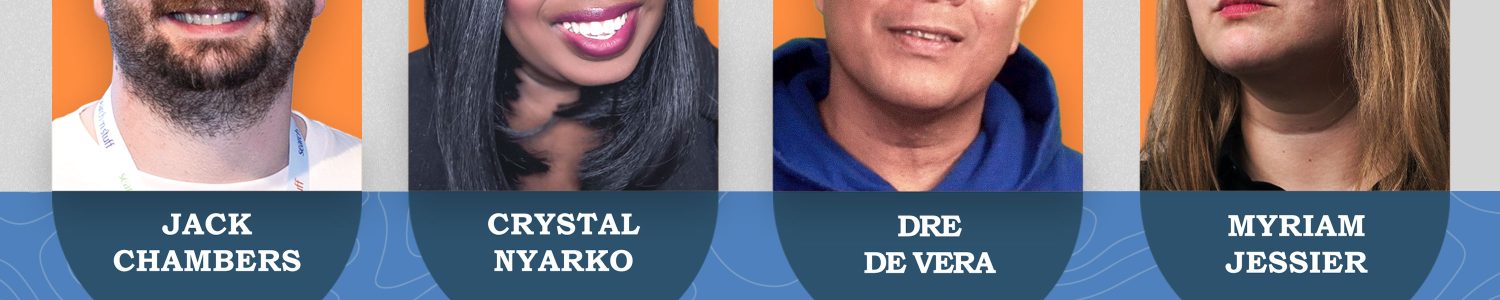
Joining our host David Bain for this podcast on how to “Optimise video for AI search” was Jack Chambers, Crystal Nyarko, Dre de Vera and Myriam Jessier.
Watch On-Demand
Listen to the Podcast
Transcript
David Bain
How to optimise videos for AI search. Hello and welcome to the November 2026 edition of the Majestic SEO Panel, focusing on how to optimise videos for AI search. I’m your host, David Bain, and joining me today are four wonderful guests. Let’s meet them. Starting off with Dre.
Dre de Vera
Hey, what’s up, everyone? I just wanted to say my name. I’m Paul Andre De Vera, aka Dre, and I’m the host of the SEO video show. It’s been going on for about six years now, and I’ve been doing SEO enterprise SEO for the past 20 years.
David Bain
Wonderful! Thanks so much for joining. Also with us today is Jack.
Jack Chambers
Hello, I’m Jack Chambers-Ward. I am the marketing and partnerships manager at Candour, and also host of the Search with Candour podcast. I’ve been podcasting for about 15 years, and video editing and video creation for sort of probably six or seven years at this point.
David Bain
Wonderful! Thank you so much for joining us as well, Jack, and also with us today is Myriam.
Myriam Jessier
Hello, my name is Myriam Jessier, and I’m a multimodal AI search expert, and I love to talk about this stuff.
David Bain
Thank you so much for joining us, Myriam. Also with us today is Crystal.
Crystal Nyarko
Hi there. My name is Crystal. I’m the founder of Clear Narrative Media. We do all things marketing, content production, and business development. I’ve also been creating content for the last 12 years, specifically on YouTube and TikTok.
David Bain
Super, Crystal. Thank you so much for joining us today. We’ve got four wonderful panellists, as you have just heard, so let’s dive into the details. Let’s start with Myriam. Myriam, how do AI search modellers watch and understand video differently compared with more traditional crawlers?
Myriam Jessier
So first of all, it’s multimodal, meaning that we’re dealing with search that is able to parse images, audio, and video. So this changes a lot of things. I have people asking me what’s the point? The point is that there are some queries that are just so much better answered by showing a thing. I call these spatial queries, and that can be anything from “how do I do this in the interface” to showing you that the thing can fit.
So when we’re talking about multimodal, it means that these machines have evolved. This is not traditional SEO. It’s not going to rely on you optimising the title, the thumbnail, and the transcript. Yes, those are foundational things. But LLMs can now actually parse the video. They check out the frames, the images in there. They are checking out the audio and what is in the image, as in reading whatever is written on it.
If I were to sum it up, multimodal AI watches a video, but not the way a human does. It’s going to take snapshot frames. It’s going to analyse audio tokens simultaneously, and obviously, anything that can be indexed, like text transcripts or timestamp chapters, really matters.
When you’re making a video, you’re sending visuals, you’re sending audio, and you’re sending a transcript confirming whatever the heck you’re talking about.
David Bain
You summed it up very well indeed, Myriam. And you also said that you need to ensure that, if the query warrants it, you create a video for it, because some queries are better served by video.
Jack, you obviously host regular video content as well, and I’m sure you publish many blog articles, so how do you determine what type of content is best?
Jack Chambers
I’ve found that a lot it comes down to search intent, which is something obviously we talk about in SEO a lot. Previously when we talked a lot about video content it was a lot of the instructional-type, where you’re thinking about how-to type searches and things like that, that was a really, really common way to find. As I’m sure everyone watching already knows, you will get served a lot of YouTube videos, even short-form videos as well.
When it comes to search, I found a lot more now is being served as video content, even outside of those types of searches. If you’re looking for different types of products, if you’re looking for different types of services, there’s a huge increase in the comparison search. That’s a very common thing in the AI search or LLM search space, and a lot of videos are doing that sort of thing, where you’re getting these direct product comparisons or service comparisons, and I have seen a lot of that increase.
So, in general, I’d say it is now broader, and there is more video content being served across different search intents, which tells me that we should be considering video content when we’re factoring it into our content strategies.
When I’m having conversations with clients, when I’m talking to the team here at Candour. We’re factoring that in more now than we were when I joined the agency five years ago. So I think it’s really something that needs to be kind of integrated and thought about, kind of from an intent level and how much you want to physically demonstrate and verbally demonstrate something.
David Bain
Lovely, thanks, Jack. Crystal, how do you actually make the decision that a particular piece of content that you wish to create is better served by video?
Crystal Nyarko
First and foremost, you need to understand what your audience wants, and then, from understanding what your audience wants, you need to make sure that you’ve got a caption that is in the video, because that gets picked up in the algorithms.
A trick that I also like to do is put a few keyword summaries of what the video is about, like in the corner of the video, so that the AI, the algorithm, picks it up. Also, making sure that you have good lighting, good sound, and just the way that you put together the video is very good in total because all of that adds to how people engage with the video, how AI picks up the video, and how the video is also distributed on the algorithm.
Those are all a key combination to making sure that you’ve got a good video.
David Bain
Amazing. So we’ll delve into that more deeply in a second in terms of how to actually produce that video, how long it should be, what should be contained in the video as well. But let’s jump over to Dre to begin with as well, and get your initial thoughts as well.
Dre, you obviously produce a lot of content, a lot of video content, and a lot of live stream content. Do you also sometimes publish, for instance, blog posts as well?
Dre de Vera
Yes, I do. But one of the main things that I pointed out in the SEOin2023 book, so I’ve been pitching this for years already, but it’s creating shorts, right? You want to create those answers and provide an answer for these answer engines. So you create a short, you make it easy and accessible for them. And now that how it actually can index all over the place and having like shorts in different feeds, like LinkedIn, either X or even Instagram, TikTok, all that’s being indexed, and it’s also being indexed within these LLMs.
So I feel like having these short-form videos answering the question is a great way to show up.
Myriam Jessier
If Dre has been talking about this stuff for years on YouTube, like entities matter, I want that guy explaining it to me because now machines are able to tell. Hey, I actually know this person, and I know that we love pretending that you know. Hey, there’s guardrails, etc. No, no, no, no, no, no. Gemini can tell it’s you. Gemini can tell if it’s Michelle Visage before she did all the plastic surgery. It can detect a lot of things. I’ve been testing it.
So, if you have all of the work that you’ve put in for years, and you’re the entity presenting this thing, you’re gonna pack a bigger punch. Not only that, but you gotta use your voice like a highlighter because sentiment is detected.
But also, these machines are trying to figure out how the sounds you’re making relate to what’s on the screen and the transcript. So it goes so much more above and beyond the stuff we use to optimise for, even for social media, the impact is really, really impressive.
And we can harness that by choosing the right people, the right topics, but also everything that YouTubers, podcasters, and content creators who do video, they do it naturally. We have to teach that to experts who are supposed to go on the screen now and save us time by making a video instead of having three landing pages that lead nowhere.
David Bain
So people like Dre, people like Jack, who’ve been producing quality videos for years, have a significant advantage over people who are just getting started because they’re more of a trusted entity. They’re more likely to be surfaced in terms of a new piece of content that’s that’s published.
I’d like to get everyone’s opinion in terms of how to produce the ultimate video in terms of structure for AI. But just before we do that, should we talk a little bit about how AI actually surfaces video, and how user behaviour, changing user behaviour, is impacting the way that videos are surfaced. Because obviously, users are now having conversations with AI as opposed to searching for very specific keyword phrases.
Crystal, I saw you nodding away there. So, how does conversational AI change the user video search habit?
Crystal Nyarko
In terms of conversational AI, people always have a query. They’re asking about different things, maybe what to eat, what to buy, how to put something together. You’ve got to make sure that you’re very intentional with the way that you create content. That’s number one.
And number two, you’ve got to make it very crystal clear exactly what it is that you’re creating, because this allows the AI to identify what it is that you’ve spoken about in the video, and it’s able to generate that as an answer to somebody else’s query.
Basically, you’re creating content based on what you know users or audiences want, but you’re also doing the extra work to ensure it gets picked up. A lot of people create content for users, but it doesn’t get picked up because they’re missing extra steps. So they’re neglecting keywords in their heading, the hooks they use, or the information they have put together to compose the video, so it’s not showing up in AI.
So I think you just have to be very intentional about video creation in this era. Before, you could have created anything you wanted.
David Bain
Okay, that’s an intriguing answer. Let’s get Myriam’s perspective on that as well, and then we can go to Dre and Jack for their perspective and what they’re doing to their videos in order to make it more likely for the videos to be surfaced, hopefully in AI.
So, from your perspective, Myriam, how does changing user behaviour alter the way that we need to be optimising videos?
Myriam Jessier
So, like I said, multimodal aligns better with the way humans search, right? So let’s think about it from a B2B perspective, and I’m gonna go run the gamut. If you are a plumber, I want to see you showing me the type of stuff you fix because I don’t know what to call what is happening in my sink, but I can show it, and the machine can translate it, map it, etc.
We’re inferring a lot of stuff, but Google has a pattern that is a few years old. Where if the query initially contains an image, it’s going to seek out another image, and then the text surrounding it to answer.
So let’s infer what happens to video. It’s the same breakdown. It’s going to take these snapshots of the video because that costs a lot to process an entire video, and its going to look for another video that matches? Okay, I’m sure. Let’s transcribe this. Okay, bring it back. So that’s the plumber. Okay, let’s go with software. Hey, agents are now watching your tutorial video to figure out how to do something. So can we make this rather clear? What the interface is, what you’re doing, etc. Now let’s take it to B2C when it comes to e-commerce. There’s a few simple rules, and if you check out the documentation for TikTok, if you check out the documentation for Alibaba, for Amazon, for Google, you’re going to see some stuff come up.
For example, if I’m showing off this product, it should be front and centre for at least three seconds. We want three seconds just in case it’s missing one of the frames. That’s your insurance to make sure that it’s actually detected. But on top of that, if it’s only like just a tiny bit that shows up, the machine cannot focus and understand what the heck we’re talking about. Okay, bonus points if you can turn the thing while you’re talking. This helps build this machine’s understanding of what the product is.
These are the little things that we don’t consider because we’re not machines; we’re humans. We see stuff, and we parse it, but we need to make sure that the machine’s gaze can get the information we’re trying to convey. So these are the little bits that are super important, and I’m not seeing them as compatible with all video styles. So, for example, the TikTok jump cuts. Oh, that product ain’t getting seen. Good luck with that. I have a few more tips, but let me pass it on to someone else.
David Bain
I want to pass it on, but I also want to delve deeper into what you’re saying a little bit. So, just before we pass it on, when you were talking about displaying your widget and turning it around and doing that and having a better impact on AI by doing that, how do you know that’s the case? How do you know? Because what analytics can you actually use to determine the impact that what you’re suggesting is having?
Myriam Jessier
So depending on how you roll, I know that Google Cloud Vision and Microsoft Azure have solutions. I know that the official name for the Vision one is just images, but there’s a video portion, and if you give me one second, I’ll get you the name of it. But there’s an API you can use to parse your videos to actually see what objects are detected, what entities are detected.
Let’s just say that I say my name, okay? My name is Myriam Jessier. It’s never gonna get parsed in English. My goodness, YouTube is just barely hanging on for dear life when I say my name. That’s a problem. When you say Candour, when you say Majestic, you have to pronounce it in a way where you know it’s going to survive and be understood.
Not only that, but you see what Dre is doing, like the sweater. Freaking love that because you know that’s gonna be read. You know that entity. We see the guy, we see the brand. Okay, this makes sense. If Jack shows up with that sweater and tells us he’s Dre, ain’t gonna work.
David Bain
Love that, and if you can go away and hopefully find that is an API that you’re you’re recommending as well? That’d be wonderful to get to get that resource and to pass it on.
I’ve been seeing that for years in terms of what you were recommending to make the brand easy to be understood from an audio perspective. Because obviously, you know, like Jack, I’ve been podcasting for years, and if you have a brand that, when you say, people can actually spell and then search online, then suddenly becomes a lot easier for people to find you. But I would imagine for AI to understand what brand you’re actually referring to.
So Jack, what’s your perspective on maybe expanding what Myriam was saying, and how you go about optimising your videos to appear in AI search?
Jack Chambers
I do have a brand name for the company I work for. Nobody spells Candour correctly because if you’re in the US, you take the U out, so that becomes a whole thing. And obviously, I’ve literally got Candour above my head here. That is a real background that stuck to the wall. I’ve got, as similar to Dre, a branded hoodie on as well, and there is a thing about, like Myriam said, actually showing stuff on screen. Often doing things like B-roll and stuff like that. If you go and film your product, photograph your product, and show it as you’re talking about it, that real element of demonstrating, you know what you’re talking about, show how it works, what buttons to press, what things to clip on and off, different settings, all that kind of stuff.
But when it comes to the actual video stuff, sort of more into the the metadata side of things and then the back end of it, particularly for kind of what I was talking about earlier, when it’s served in search results, you often get, oh, we recommend you watch this 64 second section in the middle of the video because that directly answers your question exactly as Dre was saying earlier as well. That directly answering questions, you get that through doing timestamps and chapters in your YouTube videos, and you can have them automatically done. There’s a few different, you know, tools, various different tools that can do that, but paying attention to what that is.
What I do for Search with Candour episodes that can run up to an hour, an hour and 10 minutes sometimes, and the answer to your particular question might not be until 40 minutes into the episode. So I try to make sure I’m lining up, when I’m interviewing someone, the kind of questions I’m asking. I’m dividing that video into those sections, so you can see precisely. Oh, this is when Myriam answers this question about how to optimise for multimodal search. They have a specific question. You target that specific area, and you add a little timestamp to it. You can do that to your shorts as well.
Again, as Dre was saying earlier, and for me that has been a really big part of making sure they get the answer, and maybe they’ll go on and watch the rest of the video as well. Hopefully, they will.
Myriam Jessier
They will. I have the data for this, so the AI overview is able to jump to the chapter you want, but it will also choose to use the entire video. So it knows, in terms of building an answer. There’s the entire context. I really need every bit of that video, but also that portion, that chapter. Like it can jump to it.
David Bain
And do you have the tool that you talked about previously as well, Myriam?
Myriam Jessier
Yes. So the reason why I was a bit hesitant to say what I said is that there used to be an API called Video Intelligence that is being deprecated in favour of either, depending on what you want to do, Vertex AI or Gemini API, and that’s why I’m telling you. Also, as a side note, Gemini API documentation is great because it will tell you, like, hey, this is how many frames we sample per blah blah blah. So that’s how you know you can ensure three seconds is going to help.
Another tip before I jump in: one of the things that I found in the documentation, and this is echoed in other documentation, the first few seconds of your video are crucial. So if you’re going to do anything, have your logo be visible on your clothing. Make sure that it’s not folded, and then later on you put your best foot forward, and I’m not the best to explain how to put your best foot forward. So, ladies and gents, I let you take it away.
David Bain
Jack, I just wanted to ask you another very quick question. You talked about incorporating different visual elements as part of your video, but I know that you also produce a podcast out of your video series as well. Are you saying that it’s becoming increasingly more difficult to be able to serve the same content as an audio-only episode because of you doing that?
Jack Chambers
Yeah, sometimes I think, obviously, I think the issue in the podcasting space, not to go off on too much for tangent, but the issue with the podcasting space is that you’re shifting towards video so much and has been for the last couple of years.
YouTube has been massively invested; it is now the number one podcast platform in the world. People are watching podcasts on TV, which melts my brain a little bit, so you kind of have to be doing video as much as that pains me as somebody who started off using like, Skype Recorder.exe to record Skype calls in like 2010 or whatever it was, just doing low quality audio with a little terrible headset mic.
Now you kind of need to be doing video for your podcasts, and I feel like it’s not necessarily non-negotiable, but I think you’re leaving a lot of the audience and a lot of potential on the table if you’re not integrating video into your long-form content as well.
David Bain
Oh, absolutely! And then taking the wrong button and having two people in the same track and having a bit of an echo today and having nightmare, but the challenges of the past that don’t exist nowadays. Thank you very much.
Dre, just before anyone else jumps in, let’s get your perspective on what you are doing with your video to hopefully optimise them more for AI search.
Dre de Vera
Okay, so back in the days, well, even even still today, video SEO research, you would still use keyword research, right? Now it’s all about conversation research. Like, you want to make sure that you are trying to figure out what’s the next question that they’ll answer or ask after that. So I guess in the industry term is query fan-out, right? And so this is where you want to have answers to the follow-up questions you think will happen to you know to the user.
When it comes to LLMs, you can actually see this. You can see the query fan outs that the LLMs are doing. I mean, there are ways you can Google it, but you pretty much, like, inspect the conversation. You can see the resources and the network, and then just see like, oh, it’s asking these questions right after that. And then you could just take those questions and then, you know, create content from it,
David Bain
Crystal. Myriam said that obviously chapters are absolutely key, giving AI the opportunity to jump to specific sections of the video. But AIs are also doing things like taking segments and maybe just serving segments on their own platform, or perhaps taking text or answers from those videos and just serving on their own platform, and not necessarily driving that audience through to the video itself, through to the content itself.
What’s your perspective on, you know, whether or not it’s worthwhile for creators to try to protect monetisation, for example, when AI summarises their videos?
Crystal Nyarko
I think when AI summarises your videos, it helps. But at the same time, you need to be protecting your content. So, watermarking often helps protect your content. But then at the same time, when it comes to when it comes to protection, per se, I mean, the internet is a really weird place. Like, people can take your content at every given time. They can take it from whatever platforms. AI can do that as well.
All I would say is make sure if you are a content creator, make sure you’re always watermarking your content as well as the business, just so that if anyone was to take the content from whatever platform, you’re always protected.
In terms of AI as well, AI doesn’t necessarily always give you credit. It usually would summarise, but wouldn’t give you the what’s the word? It wouldn’t necessarily tell you where the source was from sometimes, so I would just say always be protected and know that unfortunately your content will always get stolen or taken or used which whatever way on social media. But just make sure that you have the upper hand.
David Bain
Interesting. So accept that your content is probably going to get stolen at some point. But if it is stolen, show that it’s actually your brand that originated. And it’s not you can watermark it as you say, but maybe whatever Dre is doing as well, big branded hoodie that can do the job as well, I guess.
Crystal Nyarko
Yeah, a lot of the time I see that a lot of creators or brands will have their name and then they would put it as a watermark, maybe in the middle of the video, sometimes like in the corner of the video, but just be like, just make sure that you’re protected because it’s a really big issue that has been happening for a while before AI really came up. So I would just say be protected, but then at the same time, it’s also a bit of a, I don’t know what the word is, but not like a congratulation. I don’t know what the word is, but it’s sometimes good knowing that your work is also being used or being generated or being distributed. It shows the quality and the work of your content.
David Bain
Okay, so it could be emphasising the fact that actually your entity is probably perceived highly by users and AI. But yeah, got you. Myriam, before we move on to a more creative side of discussions, what advanced schema or metadata helps LLMs index video content best?
Myriam Jessier
Darn it! I was going to explain that yes, schema is important, but it is not important in the way you would think. However, before I jump into this, Crystal, I agree with you, but I got a nuance because I was making that face because I got to sit at a conference talking about how to optimise video for AI search, and the first third of that conference was literally the two or three in-depth articles I put out. So I know that if you torture AI enough, it will basically strip all of my work, including all the video work that I’ve been doing.
But I have opinions about this. I’ve seen some transcripts of how people talk to it. That there’s no way to describe what we’re doing. If they were truly sentient, we would have a mass AI extinction event already. Okay, but but if you talk to ChatGPT long enough about I have to prepare this conference, I have to do this thing. It’s gonna serve you someone else’s research, but in your own words, and this creates this synthetic plagiarism situation that is making everything even worse because we currently have a lot of dead internet theory going on, where one person will put out a video and like, I can pay a few cents and have, instead of Dre, I can have the same exact background, but it’s like a synthetic, generic idea of a hot girl, and you can decline all of this to make ads for it, and we see them around.
This happens a lot, and at some point we just gotta go. Okay, I’m building something with video that nobody else. You can imitate it, but it doesn’t feel quite right. People know that it’s me. People know that it’s me. So this is also very important when you’re creating something. You have to have your own concept. You have to do it in a way. It’s kind of like fries or your mom’s apple pie or whatever. It’s that one feeling that hits just right, and no other imitation can come close to it. And that’s so hard to maintain, though. But I think that’s the key to having success with video. Now, what was the schema question?
David Bain
Just anything that you can say in relation to what advanced schema or metadata helped LLMs index video content best?
Myriam Jessier
So I think that we need to start with a video object that is like the basic stuff, but if you can go in there and actually give the real properties, so we need to make sure that, yeah, the thumbnail is specified because I know that for everyone around the table this seems normal. Most humans that are going to upload a video in a few minutes or seconds are not going to think about this. They’re not going to think about, hey, do we even provide anything that the schema can show? So this is super, super important.
And I know we’re angry at the chunking word, but we really need to use certain properties like, hey, this has a part that contains this, so we need to explain all of this that we normally don’t do with basic schema. So you have to start thinking about, okay, so where’s my transcript? Where’s my thumbnail? Where are these chapters that I’m letting you know a machine specifies automatically? If I don’t let it specify automatically because I understand my context way better, how am I specifying this in the schema? Dre, I see your mouth moving. I know you want to jump in.
Dre de Vera
Yeah, yeah. So when you think about it, when you do SEO, you can’t get found unless you’re indexed, right? So you want to make sure that your videos are indexed, so they can be found, whether it’s Index Now through Bing and then submit. You can do your Google Search Console and get those things. But making sure that your videos are indexed, embedding them on pages is a great way for the crawlers to find them. So being crawlable and findable is, of course, very important to LLMs.
David Bain
What part does associated content play? Is it just the video that is key now, because AI can actually understand the video and what’s in the video and automatically produce a transcript from that, or do we need to produce as much voluminous, high-quality related content in addition to the video chat? Jack, what’s your perspective there?
Jack Chambers
Yeah, I think the standards for quality have gone up over the last few years. I think that matters a lot. You know, we were talking before we started recording about audio clarity and video clarity, as Myriam touched on earlier, being able to clearly say something and talk about it and enunciate it and all that kind of stuff really matters. And Dre, you touched on that from there as well. Having things indexed and really kind of surfacing the right things. Obviously, Dre, you mentioned keyword research earlier as well.
But when you’re thinking about if you’re doing a scripted video or if you’re, you know, writing questions for your podcast interview or whatever it is, go in with a keyword research mindset so you can say the things that are relevant out loud during that conversation, rather than just stumbling around and poking around as I have been guilty of doing in the past.
David Bain
Okay, okay, and Dre, what about other content? Do you produce the full transcript? Do you edit the transcript? Do you produce blog articles from your video show as well?
Dre de Vera
Yeah. I mean, I use transcripts for everything. I mean, I wouldn’t post it raw, but I definitely will have it bulleted, easy to read, formatted the way LLMs like. I mean, there are tons of tutorials on how to do this. Everyone has their own way, but, you know, having it bulleted, a couple sentences only, and making sure it’s, again chunking. So we want to make sure it’s organised, and it’s structured correctly.
Myriam Jessier
So first things first. The way I can come to understand what transcripts are helping with is that a transcript is kind of like a site map to navigate a specific visual frame to understand the context of the frame. So the language is the guide for the visual understanding. So if you’re going to do something, you better do it right, because there are what we call out-of-vocabulary terms (OOV). So these that are a bit unusual, a bit more difficult or less known need to be repeated two or three times within whatever we’re talking about, just to make sure that they survive.
When you’re dealing with auto-generated transcripts, frequently proper nouns are going to go out the window, you know. Brand names, technical terms; those are all the out-of-vocabulary stuff. Meaning that speech-to-text models were never trained to recognise them, and it really matters because I had a problem for quite a long time because of a bad YouTube transcript where I didn’t say my last name, which is Jessier, by the way. Well, somebody took the transcript of my talk, put it in ChatGPT, and wrote an article about it, and it got attributed to Myriam Ellis. And this sweet lady did not grow up in a Yiddish-speaking household, did not move to Hawaii as a kid, and is not a French person that’s angry on the internet. Can you imagine her life now? We tried to clean it up, but like she’s running from it.
David Bain
Crystal, can we get your thoughts on how you go about determining what the optimum length of a video is? How a video should be structured, and does it differ according to different types of content that you’re trying to optimise for?
Crystal Nyarko
When it comes to video, first and foremost, it’s the platform that really, really matters. Let’s say that for Instagram and TikTok, it’s usually short-form content. People’s attention span, especially in this generation, is very short. So when you are creating content for either YouTube Shorts, TikTok, or Instagram, I would say anywhere between 90-seconds, so one minute thirty till about three minutes is a good length. Anything after that, people’s attention span tends to drift off. Unless what you are talking about is like very, very interesting and very entertaining, and it’s hyper energetic, then maybe a little longer. But usually, on those platform, within three minutes, people just start to like, yeah, they just start to lose concentration.
That helps and gives a bit of a guideline when you’re creating a video on YouTube. Also, depending on the type of video that you are doing, if you are doing a vlog or a conversational piece, I would say about the 10-minute mark. Anything that’s longer, like a podcast, would be between 45 minutes to an hour. Otherwise, people yet again start to drift off.
So, number one, your platform is very, very important because it informs you on the type of content that you are creating. It also helps you to understand the format. So whether you’re creating content in landscape or portrait, that also helps. Usually with the quick attention span apps, so Instagram, TikTok, YouTube Shorts, and even Facebook videos as well. It’s usually vertical, very quick, just to the point. Whereas YouTube tends to be landscape. Same with LinkedIn, but LinkedIn has changed a little bit when it comes to formatting. But generically, with YouTube, it’s landscape.
Then it goes to the audience. So, who exactly are you trying to create this content for? What are their interests? What do they like? What do they want to see? Who are you trying to target? I always say the first, like, say the first 10 seconds of a video is very, very important, and it informs people on whether or not they want to continue to watch the video or not.
As a creator, when I’ve created videos, hooks and like, that one-liner or that piece for the video is very important. It tells the people what the video is going to be about, and then they can make The decision whether they want to carry on or not, and then if you’re doing long-form content, the first 90 seconds is very, very important because you should give an overview of what the video is going to be about.
So a quick recap, but taking snippets where people are really like going to be engaged in the video. Otherwise, yet again, people tend to just drift off. So I would say, reiterating, platform number one is very very important. Your audience, number two is key for you to determine exactly the type of platform you’re going to use and how long the video would be, and number three, it’s just ensuring that you’ve got good lighting, you’ve got a good mic, and you’re engaging. Otherwise, people will drift off. So these are the key things: from platform to people to quality and then interest.
David Bain
Thank you so much. And Dre, we’ve talked a lot about optimising video for AI search, but obviously we can also perhaps even use AI in the production of the video, or even actually to create the videos, or create videos that pretend to be us, but are generated by AI. Is that ever going to be good or a worthwhile thing to do? Or are we always, as human thought leaders, going to be better off actually being front and centre, being the face, and not letting AI actually produce the videos themselves?
Dre de Vera
So I’ll be honest. I actually was fooled by some people thinking that it was them, but it wasn’t. So it’s getting good, and with the right cuts, it can work out. But for me personally, I mean, I just love being in front, like talking to people, having the conversation. I get my style of doing video is conversations and doing interviews, right? So I can’t really have an AI do that for me.
And then when it comes to AI and using AI to help create videos, I definitely use it for the research, right? I mean, before it would take what, 20 hours to make an episode, and now it can come down to maybe just an hour of doing research when you to produce the episode because you have to come up with the questions. You have to understand your guests. You have to come up with the follow-up questions, and those follow-up questions become the conversation that the AIs love.
David Bain
We’ve just about come to time here. Let’s finish up by getting everyone’s maybe single tip on what an SEO can do or marketer can do to better optimise their videos for AI search, so maybe what your number one tip is in relation to that.
We’ll go around everyone asking that question, and then just ask everyone to remind the listener, the viewer, who they are and where they can be found. So Dre, let’s start off with you. What’s your number one tip to optimise a video for AI search?
Dre de Vera
If you want to optimise for AI search, you have to make sure that your video is distributed everywhere you can, on all the social networks, any embedded to any websites that you have, and maybe add it to a press release, whatever it is. Just making sure that your video is distributed to many places where it can be found is a great way to get found.
David Bain
Wonderful. And where can people find you, Dre?
Dre de Vera
You can find me at paulandre.com and every Friday at 12 p.m. Pacific Standard Time on YouTube on the SEO Video Show.
David Bain
Thank you so much for joining us, Jack. And what is your number one tip for optimising video for AI search?
Jack Chambers
Always prepare and do some research. Do some keyword research. Get stuck into that process early on before you start recording, so you can actually plan your structure, your chapters, all that kind of stuff we were talking about earlier.
I think that for me has been the biggest shift I have made in terms of structuring my interviews and stuff like that. Exactly as Dre said there of thinking about the kind of questions and research you want to do about your guest and about the topic as well. Do that stuff ahead of time, so you can prepare yourself, and you’re already rather than trying to squeeze something into a topic or a title that doesn’t quite work, do it ahead of time and prepare yourself, so you’ll give yourself the bit more lead time. Make sure it’s optimised ahead of time.
David Bain
And where can people find you, Jack?
Jack Chambers
You can find me. I am Jack Chambers-Ward on all the usual social media places, LinkedIn, Instagram, all those kinds of places, and I host the Search with Candour podcast. You can find that on YouTube, Spotify, Apple Podcasts, or at WithCandour.co.uk.
David Bain
Superb. And, Myriam, what is your number-one tip for optimising videos for AI search?
Myriam Jessier
So I have the professional and the personal. The personal is to adjust your webcam properly so you don’t end up with three chains. I learned that hard lesson in 2026. Now the real tip: use your voice as a highlighter. You get to say, put the emphasis on what’s important. Important for you, what the machine should be paying attention to, what the humans should be paying attention to, and it helps you because the more you enunciate, the clearer the stuff you’re saying is for a human and for a machine.
Now, where can you find me online? Well, you can find me in ChatGPT, you can find me on Gemini, you can find me on Claude. I’m pretty sure because now people are asking who. Yeah, I get told you come highly recommended.
So beyond that, you can find my hot takes on LinkedIn, or you can find me on Search Engine Land, ranting and raving about video entropy and other bits you may care about.
David Bain
Thank you so much, Myriam. And I just want to add one other thought/tip in addition to what you were saying there. You were talking about enunciation and making sure that you emphasise whatever phrase you wish to be emphasised, and a lot of people write the full transcript beforehand of what they’re going to say and read it out loud and actually write as if they’re writing for the written form.
But people speak differently compared with how they write. And if you are going to write everything out beforehand, then please think about it as if you’re actually speaking, as opposed to writing. And when you’re speaking, you speak in bursts that don’t necessarily finish at the end of a sentence. So think about where the natural pause is, and build in a pause that isn’t necessarily where the punctuation happens to be.
Anyway, a little bit of a rant there, Crystal. What’s your number one tip for optimising video for AI search?
Crystal Nyarko
For me, context is content. Context is content. The context of your video is your content, and it’s what will help you to show up. So please make sure that when you put together a video, your context is clear, crystal clear. It’s in the captions. It’s as a header. It’s as a hook. It’s somewhere the algorithms can crawl, index, and make sure you’re relevant to a specific problem. Context is content.
You can find me on all the platforms: LinkedIn, Instagram, TikTok, and where else? The usual. It’s Crystal Nyarko.
David Bain
What a wonderful discussion! What wonderful panellists! Thank you so much for joining me.
I’ve been your host, David Bain. You’ve been listening to the Majestic SEO panel. If you want to join us live next time, sign up at majestic.com/webinars, and of course, check out seoin2026.com too.
Previous Episodes
Follow our Twitter/X (@Majestic) and Bluesky (@majestic.com) accounts to hear about more upcoming episodes!
Or if you want to catch up with all of our previous episodes, check out the full list of our Majestic SEO Podcast episodes.

- Optimise Video For AI Search – Majestic SEO Podcast - October 27, 2026
- Fighting Ref Domain Spam - October 26, 2026
- Are you using AI the WRONG way in SEO? - September 23, 2026