


Today we’re doing something a little different – we’re turning the lens on ourselves and asking what actually makes a great SEO podcast? We’re getting into what separates genuinely useful SEO content from the noise, and covering everything from how the best hosts translate complex topics for mixed audiences, to why storytelling might be the most underrated SEO skill of all.
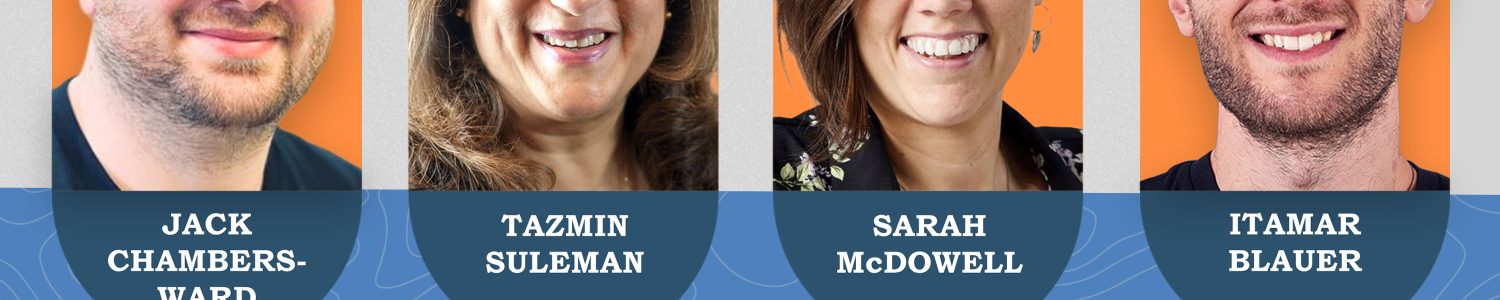
Joining our host David Bain to talk about what makes a successful SEO podcast was Jack Chambers-Ward from the Search with Candour podcast, Tazmin Suleman and Sarah McDowell from the SEO Mindset Podcast, and Itamar Blauer from the SEO Unplugged podcast.
Watch the Podcast
Listen to the Podcast
Transcript
David Bain
Hello, and welcome to the July 2026 edition of the Majestic SEO Panel, discussing what makes a successful SEO podcast.
I’m your host, David Bain, and joining me today are four wonderful guests. Let’s meet them, starting off with Itamar.
Itamar Blauer
Hello, hello. Happy to be here. Thank you very much, David, for hosting this episode. It’s going to be great.
I’m Itamar Blauer. I’m an SEO and digital marketer since 2008. I’ve got my own podcast, which you can sort of see in my virtual background, which is called SEO Unplugged, and yeah, really happy to be here.
David Bain
I was wondering if that was on your wall in the background area, but you’ve pulled away the curtain already and shown us half of your tricks, but I’m sure you’ve got some more to share in a little bit of time.
Also with us today is Sarah.
Sarah McDowell
Hi. Thank you very much for having me. Yes, my name is Sarah McDowell, and I am a freelance podcast producer and marketing consultant. I’ve got a little recording studio in my hometown, Worcester, and I am, of course, the co-host of the SEO Mindset podcast.
David Bain
And, funnily enough, the other co-host is also with us today.
Tazmin Suleman
Hello. How exciting. I’m really happy to be here. So, my name is Tazmin Suleman, the other half of SEO Mindset Podcast, and I also work in coaching around career development and all things related to that.
David Bain
Wonderful, thanks so much for joining us, Tazmin. And lastly, but absolutely not least, is Jack.
Jack Chambers-Ward
Hi, I’m Jack Chambers-Ward, and I am the marketing and partnerships manager at Candour, which is a digital agency based in Norwich. I am the host of the Search with Candour podcast. And I’ve actually been a podcaster longer than an SEO or digital marketing. I’ve been podcasting since I was in university, so coming on 16 years now of podcasting, and then I eventually got into digital marketing, and ended up doing a digital marketing podcast.
David Bain
Absolutely super. Well, great to have everyone on. We’re gonna have a wonderful discussion about what it takes to make a successful SEO podcast.
Itamur, what is your SEO podcast, and why did you start it?
Itamar Blauer
My podcast is called SEO Unplugged. The reason why I started it was because I wanted to have an environment where I can bring SEOs on and digital marketers on, and just have a conversation, just pick one particular topic, and just go back and forth, bouncing off each other.
The name sort of stemmed from MTV Unplugged, that was sort of like why I decided to call it SEO Unplugged, because I thought that sounded cool, and I was in a phase where I was watching loads of the MTV Unplugged, just sort of like on demand, and the whole premise is like MTV Unplugged is it’s all acoustic type and there’s nothing that is really pre-rehearsed, no pre recorded parts, no pre-planned questions, etc.
I wanted the podcast to have that sort of feel that you can come in and just like a fireside chat, literally just have a conversation, and that was the sort of theme I wanted to have, which I couldn’t really find that was out there when I started it.
David Bain
And how many episodes have you done this, or when did you actually start it?
Itamar Blauer
So, at this point in time, 43 episodes, I think, have been published. I’ve got a sort of monthly cadence at the moment, but it started, I believe in 2022 or 2023 and at the start it sort of, it wasn’t a particularly had a set cadence to it, it was more just like on the fly when I had time, but in the past couple years I have really tried to sort of nail down the cadence so monthly I thought was something that works for me.
David Bain
Lovely. Yeah, very important for it to be something that works for you, rather than actually try and do too much and not do it regularly. Let’s go to Sarah next. Sarah, what is your SEO podcast, and why did you start it?
Sarah McDowell
So our podcast, me and Tazmin, do the SEO Mindset, and the reason I started was because I loved the sound of my own voice, joking, joking, joking, joking. So the reason why the SEO Mindset podcast was born for couple of reasons, really.
I met Tazmin in the wonderful Women in Tech SEO community, and I can’t remember how we got talking. Maybe I did a post on there and was asking if anyone was interested in podcasting or starting a podcast because I was offering sort of like chats with anyone, because I’ve been podcasting since 2018.
I’ve done a whole host of different podcasts. I’ve worked for Captivate as well, which is a podcast hosting platform. So, when I decided to go freelance, I put a message out in Women in Tech, just asking if anyone wanted to chat about podcasting, if they wanted support, and I believe Tazmin and I first started talking because Tazmin wanted to start a poetry podcast, which I still think she should do.
But as we got chatting, I don’t know, there was just a little chemistry, a bit of spark between us. It was really easy to talk to Tazmin, and something that we realized was there, there’s lots of wonderful how to do SEO podcasts, but we saw a bit of a gap, so being part of the Women in Tech SEO community, shout out to Areej and Erin, there was a lot of people talking about imposter syndrome or time management skills, softer skills, career development, and at the time there wasn’t a podcast that was solely dedicated to that podcast, would do one or two episodes about it.
Tazmin and I saw a gap, we saw a niche, really, and we’re like, I think there’s an opportunity here to create a podcast for the SEO industry, for SEO professionals that is solely about mental health, career progression, career development, and we relate it to those in the SEO industry.
David Bain
Tazmin, do you have a different perspective on how things actually happened?
Tazmin Suleman
No, no, not really. I do have a confession to make, though. Up to that point, I had never been on a podcast, even as a guest, and I don’t even think I’d even listened to a podcast, but people were saying to me, Tazmin, do something with your poetry, do something with your poetry, and when Sarah’s message came out, I responded to it, and we were talking.
Alongside that, I’d been speaking to lots of individuals in the industry about their struggles, and things like, as Sarah said, imposter syndrome, burnout, confidence issues, wanting to speak publicly, all of those topics were coming out, and I didn’t know how to address it. I didn’t have a container at that time where I could add value, help them out, and as Sarah and I were speaking about it, it was almost the most natural thing in the world to take that, take those issues and answer them with the podcast.
Now, the first day we recorded, bearing in mind I still had not even listened to a podcast, I was, I had no idea what I was doing. So it’s been a real voyage of discovery.
David Bain
I love what you’re saying there about knowing your audience before you get going, because then you can really heartfully communicate something towards your audience, who are obviously open to receiving what you’re talking about there as well. I think so many people actually find their audience along the way, rather than actually knowing their audience beforehand, so that’s a wonderful way to start.
Jack, what is your SEO podcast, and why did you start it?
Jack Chambers-Ward
I host Search with Candour, which is a weekly interview show. We also have sort of monthly news episodes as well. I didn’t actually start the podcast, it was started by my co-host and the SEO director here at Candour, Mark Williams-Cook. He started it, I think it was 2018, 2019 something like that, early 2019, and we’ve just crossed 300 episodes about a month or so ago. We haven’t missed a week since there was a break when Mark stopped it, and then I took over, and we haven’t missed a week since, so I’ve been trying to be pretty consistent.
It’s broadly a kind of similar vibes to what Itamar was saying about SEO Unplugged, but I feel like I do a little bit more prep, and that maybe we’ll get into that topic of how to prepare and how to approach, you know, being a host and things like that, but yeah, it’s broadly interviewing people across SEO and digital marketing about hot topics, interesting things, and then doing sort of a monthly news recap of what’s happening in the SEO industry over the last month.
David Bain
Intriguing. So, did you actually start at Candour then after Mark had started the podcast, and if so was part of the recruitment process the fact that you had podcasting abilities beforehand, or was that something that naturally evolved after you joined?
Jack Chambers-Ward
It was a funny story. Actually, I hosted a movie podcast for eight-nine years that recently finished, called Sequelizers, where we fixed bad movie sequels. We would rewrite them, recast them, all that kind of stuff, and Mark was listening to Sequelizers, unbeknownst to me, and listened to the episode we did about Predator 2, and was hiring at Candour, and obviously was looking and thinking, like, oh, maybe I could hire someone who could do SEO and help out with the podcast in some form.
Then he saw I had both, and it only just recently added that I’m a podcaster onto my LinkedIn, but Mark DM’d me out of no, and was like, ‘Hey, just been listening to your podcast, would you be interested in joining us? And essentially, for the first sort of six months at Candour, I had to prove myself as an SEO, basically like had to actually do the work, work with clients, prove that I can actually do marketing, and I’m not just a podcaster, but eventually, and now my role is far more the podcasting stuff and our events.
I took over, I think was the start of 2022, and I’ve just passed my five year anniversary here at Candour, so it’s been about four, four and a half since I’ve been doing the podcast, so yeah, and like I said, I’ve been doing podcasts long before then I’ve done all sorts of stuff about video games and comics and movies and all that kind of stuff, but this is the first one I’ve done professionally as part of my job.
David Bain
Actually that’s an undersold reason to do a podcast, to build your personal brand, and it’s something I’ve found to be incredible as well, because I had a fairly successful podcast on digital marketing, called Digital Marketing Radio, and I was ranking consistently the top 10 in Apple Podcasts for digital marketing for a couple of years, and because of that, I had other big marketing brands reach out to me to say, can you host something for us as well, and because of that, unfortunately, I put my own podcast on hold, or hopefully I’ll get something else launched fairly soon again, but it’s incredible, the opportunities personally it opens up to you there as well.
My first podcast was in 2006. I was actually intrigued by what Ricky Gervais was doing with podcasting initially, back in about 2005 or so, kind of the early stages of iTunes. So, when it became available as a platform, he was one of the most popular podcasters in the UK at the time, and that little series got made into an HBO series, actually, but at the time you just had iPods, that was before the iPhone, iPhone launched 2007 of course, so people had to actually plug in their iPods into their computers, sync the devices together, download them into iTunes, and it’s just so, so easy to subscribe to a podcast now, and, and you almost take it for granted, don’t you? Because of a smartphone, just how easy it is to get your message across.
Let’s go to each of our guests again and find out a little bit more digging deeper into the shows, in terms of why you structured it the way that you do, and perhaps what you’ve done to evolve the show over time.
So, it’s where I think, I think you mentioned that you started the show about 2022, and you’ve done about 40 odd episodes. How different, if at all, are episodes now compared with when you started, and are there any elements to actually how you put the episode together that you’d like to shout out?
Itamar Blauer
To be honest, I put a lot of thought into it beforehand, and the one thing that was really important for me was the aspect of consistency, and I wanted somebody to be able to go to the first episode and go to any other episode and be able to sort of get the same sort of feeling and the same vibe, so that was really important for me. So, even in terms of branding and all this sort of stuff, I wanted to get it done right the first time around so I can just keep it going.
I didn’t really evolve anything per se too much, the only thing that did change was the cadence, and that sort of only happened after a year and a half until it was actually a chat with Aleyda Solis who told me it’s like, “Hey, look, you need to be more consistent with it, because she had her Crawling Mondays podcast, and that I believe I don’t know if it’s still going weekly, but at the time it was a weekly show, and I was also considering how busy she is, I was like, yeah, you know what, if she’s able to pull that off, there’s no reason why I shouldn’t be able to do at least something every month, but everything else I really try to keep consistent and the same from the beginning.
David Bain
Have you been able to measure the value of that consistency?
Itamar Blauer
That’s a good question. I definitely think the viewership over time, at least from the data I can get from Spotify and similar sources, has gone up. I think the consistency part, there are multiple ways to measure it, and measurement is a whole specific topic, which maybe we’ll have time to get into, but I have definitely seen that there’s been a bigger audience, there’s been more discussions, and I’ve had even people who have been on the show who have sort of helped in terms of certain promotional aspects, like Alex Moss, who I had on fairly recently, talking about agentic search, agentic commerce, and he gave a talk at Charlie Whitworth‘s conference Hive MCR and put a QR code to the podcast episode.
So I think that consistency really does just enable more opportunities to talk about different topics, speak to different people, and then that can also branch out to share towards their audience, or in different other places as well.
David Bain
It certainly seems like more often is better, as long as you’re consistent about it as well. I can speak to that from Majestic’s perspective as well. So, I host two different podcasts for Majestic. This one, the Majestic SEO Panel show, is this monthly panel discussion, and that’s done live, published or live streamed via Streamyard, but obviously streamed to platforms like LinkedIn and YouTube, and there’s a bit of interaction, but more people consume it as an audio podcast afterwards, and that’s had a decent slow growth story.
But then the other series that I host, obviously changes title every year. This year it’s called SEO in 2026 (the listener can guess what next year’s one might be called…), but that’s a much more regularly published episode and sequence of episodes, because when I record everything in terms of what’s going to be included in the book, then episodes are published five days a week, so Monday to Friday, five days a week, for about 100 days, probably about six months or so, in total, when you take out weekends.
Then when it goes to weekly episodes for the Additional Insights series, the organic reach that it gets on various podcast platforms decreases a little bit. At the moment it’s it’s number one on Spotify for SEO, because a large part of it is because we’re publishing five days a week, but when it drops down, it’s interesting, actually, the ranking drops down a little bit because of the decrease in publishing.
I’d love to get everyone else’s perspective on that as well, but let’s go to Sarah and Tazmin now, in terms of your show, and perhaps talking about cadence as well. So, in relation to your show, how much has it changed, if at all? How much have you evolved it, and is there any particular cadence that you find to be most successful?
Sarah McDowell
So, Tazmin, are you happy for me to go first?
Tazmin Suleman
I could see you itching to answer, so go for it.
Sarah McDowell
The SEO Mindset has evolved as time has gone on, and that is because we are tweaking little things, or we trial different things, or we try something new. For example, a change recently is having a really strong hook, so at the beginning of episodes we used to do the standard hello and welcome to the SEO Mindset podcast, yada yada yada, whereas now, because you’ve got to get the attention of your listeners and you’ve got to give them a reason, we now a lot more from the get go, we start with a stat, we start with a fact, we start with a statement that is going to get people drawn in.
We’ve also tweaked the ending as well, because we’re always trialing, how do you keep people listening right to the very end. Unfortunately, no podcast is going to have 100% consumption rate, because that’s just not how listener behaviour is. Right, people fall off, get busy, do bits and bobs, but there’s definite things that we have tried to try and get people to stay till the end, such as teasing Easter Eggs, so at the beginning or the middle, tease what’s coming at the end, or making sure people stick to the end, because we’re going to give something practical.
So, yeah, like we’re always tweaking and trying different bits and bobs within our podcast. But also, how we interview as well, so we come away from saying here’s the questions to our guests, where and we sort of say here our talking points instead, because the purpose of the SEO Mindset is we’re trying to get it conversational and we’re trying to have a free flowing conversation, and we want to be able to go off-piste, so even if there’s a question or an interesting topic that’s not in the plan, we want to be able to explore and go and have that conversation, so we found that rather than saying here are the questions to our guests, saying here are talking points, it gives us that flexibility to be able to explore topics more in depth.
Something that has remained the same is consistency, and I agree with what everyone’s saying here. So, we’re weekly, and we always get episodes out on a Thursday. There are times that we don’t always get there, but we’re fairly consistent there. But, yeah, Tazmin, is there anything else that you’d add?
Tazmin Suleman
So, I’m going to take a slightly different angle. What stayed the same is the mission behind the podcast. We wanted to create something that would help SEO professionals advance in their careers and look after their well-being.
So one good pointer is, before each episode, asking myself, is this going to help them in that journey? If it isn’t, then the episode isn’t right. If it does, then I’m on the right track. We always wanted to give somebody, the listeners, something that they could take away an action, so it’s not just a conversation, it’s have a go at this. This is a small thing you can try, because I think there’s lots of information out there, but when it’s consumed in this format, if they can take away one thing, then that’s great.
I think the other thing is, especially the episode Sarah and I do together, because some we do with guests. I think there’s a real, genuine friendship between the two of us, and that I believe comes across, and then that translates into trust. So, when we meet people, they’ll say things like, I feel like I know you so well, and for me that’s really heartwarming, so you know we can have results in the terms or in terms of data, but that’s it’s not data as such, but it is a result which I really, really value.
What’s changed now, bearing in mind I came in as never having recorded a podcast, so for me before, at the beginning, I needed to have more structure to give me that confidence to be able to record as time has gone by. It’s as Sarah said, it’s more about talking points, but in a way, I don’t mind that, because I’m illustrating to everyone who’s listening, when we say give this a go. What’s the worst that can happen? Put your hand up for an opportunity. We’re embodying that. I’m embodying it.
David Bain
I’d love to ask both of you just a quick follow-on question. Could you have a think about how you actually structure the episode in terms of questions for guests, because there are many different ways to do that. Sarah mentioned that you come up with different bullet points rather than questions sometimes as well, but I’d be intrigued to see if you try and select questions that could be ranked in search or other ways that you come up with questions for guests.
And Sarah, you mentioned that you try and bring some kind of stat to the start of an episode, can you give me an example of a stat that you’ve actually used, and why that stat was a great hook and kept people listening to that episode?
Sarah McDowell
Yes, so, oh gosh, you know, when you do so many hooks that they all kind of merge into one big one in your brain, but for example, there is a topic about happiness in the workplace. So either me and Tazmin are talking about that as a topic, or we’ve got a guest who is coming on, or maybe they’re coming on about talking about how to be a good manager, how to be a good leader.
Once we know what the overall topic is, then we can structure the start to make it really engaging by finding stats that will complement that topic, so for example, if it was about workplace happiness, maybe there’s a stat about how many people are unhappy at work, or how many people have left a job because they’re unhappy with their manager, or maybe it doesn’t have to be a stat, maybe we can start with a real strong question, like, have you ever left a job because of a bad manager? Have the silence let it sink in with them, or maybe it’s a fact stat, or whatever.
It’s about being creative, and based off the topic, finding something that can sort of get someone’s brain going and trying to pique that bit of interest.
David Bain
Tazmin, what are your thoughts then on selecting topics, selecting questions for guests, and how you go about, I guess, being a little bit adaptable to what the guest is saying as part of the conversation as well.
Tazmin Suleman
So, I think for me, it’s really about listening to what they’re saying and letting the conversation flow. The way I try to structure the episodes is the first half talking about the issue and identifying issues that people have, so the listeners can feel that all right, that sounds like me.
So, with one of the hooks, Sarah, when we did the topic about inner chatter, we started off by saying that you know averagely people have between 60 to 80,000 thoughts a day, and then we went into what that leads to: imposter syndrome, overthinking, procrastination, and issues that people are talking about, you know, when we meet them in person, when you know you listen to conversations on communities and LinkedIn, and then in the second half it’s all right, we’ve, we’ve heard about what the problems are, what things people are facing. In part two, we’re going to talk about some simple ways that you can address some of these issues.
David Bain
Love it. Okay, so you’re just really thinking about the listener, really, as well, rather than actually trying to research questions online beforehand and optimize everything. It’s just resonating with your target audience.
Tazmin Suleman
I think, because I do this in my line of work, so I hear firsthand from people who are coming on discovery calls with me, my own clients, so I can hear what issues are, and you know, Sarah and I talk about things that she may have encountered, so it’s, it’s real problems, and we want to give people real solutions and add value.
Sarah McDowell
Yeah, so it’s always on personal experience. So the topics that me and Tazmin come up with will base it on what we’ve lived, what we’ve dealt with, what we’ve done.
Then the guests, when they come to us and they want to be on the show, we’re led by what they want to talk about as well, and we’re always really key on, we want this to be authentic. It’s okay to get vulnerable, because when people are vulnerable and they’re open, that’s when you can have some really cracking conversations, and it might get emotional, it might get really happy, it might get really sad.
But the whole point is that we’re raising awareness about important topics, and I think we’ve created a safe space for people to be able to come on, and sometimes it even feels a bit like therapy, doesn’t it?
Tazmin Suleman
Yeah, we have had people talking about issues with anxiety, so it’s that there doesn’t seem to be anywhere else where people can talk about these things in the industry, and I think the more we talk about it, the more it gets addressed, better solutions. You don’t feel that you’re alone, that I’m the only one who procrastinates, or I’m the only one who. Second, thinks whether I should put my hand up for that opportunity or not. Actually, there’s lots of people out there facing it.
David Bain
I think that’s a great example of two experienced co-hosts there as well. Sarah, when you went, isn’t it, Tazmin? And that is Tazmin’s lead to take the conversation forward as well, because I think so many podcasters probably leave things hanging or ask a question and don’t direct it towards that one individual, so it’s a lovely way of keeping the conversation going.
Let’s keep the conversation going with Jack this time, because Jack obviously took over a podcast from Mark previously. Did you change the look and feel of the podcast at all in any way, was there any feedback from listeners from the previous version? I guess, in terms of how you were with the show, was that a bit scary, actually taking over from someone else, and in terms of when you started versus how you’re doing it at the moment has much changed?
Jack Chambers-Ward
Yeah, quite a lot has changed, actually. I was actaully a listener of Search with Candour before I became the host, so I knew about Candour and what they were doing with the tool, like Also Asked and things like that before I joined the company, and I’d kind of try to be more aware of what’s going on. Like I said, been podcasting a long time, been listening to podcasts for a long time as well. So I thought, if I really want to go into, you know, working in an agency in SEO, that was kind of my plan for my career, like then I need to understand the industry a bit more.
I found Search with Candour and realized they’re local, they’re based in Norwich. Oh, isn’t that great? But it has changed a lot. Mark used to do a lot more solo shows, where he would talk about topics that are happening in the industry, and things like that. I’ve recently brought those back, where I do a monthly news recap kind of thing, because I’d mostly focused on the interview side of things, and the vast majority episodes are one to ones, or, you know, two guests, one guest having that kind of conversation that we’ve, you know, the guys have already discussed.
The biggest change for me, and as I’m sure you know, we’re all thinking about, is that video is now a thing for podcasts, and as we are live stream right now, video is kind of a huge topic, I think, in the podcasting industry, and you know, having been to conferences for podcasting, like the podcast show in London, and things like that, everybody’s constantly talking about video, video, video. It was just the audio show for the first, like, 150 episodes, but since I think it’s 2023 I believe we’ve been on YouTube, and now, obviously, the Spotify now has video and all that kind of stuff, and that has been a big shift.
We now have this studio, the lights, the cameras, all that kind of stuff has been a big shift, rather than just, you know, recording into a microphone and editing and things like that. It kind of changes your approach, and this being a live stream, I think, is a perfect example of video is much harder to edit and let the conversation flow naturally, as you were just saying there, David, and as Sarah and Tazmin just demonstrated, keeping that conversation flowing is a key part of podcasting.
I have literally stopped watching and stopped listening to podcasts because they’ve been edited too heavily, and it just constantly cuts and chops and chops and chops, and you’ll see I’m speaking, and it’s being edited, so you guys are doing your thing, and suddenly bouncing around in your little frames, and it looks really unnatural, and looks really weird.
So, yeah, I think video has been the biggest change for me, but it is a fairly different show to what Mark did, and I’m kind of trying to bring back elements of that. I think we broadly got good feedback. I’m sure some people miss Mark. He’s still on the show, he still appears, you know, whenever he’s not travelling the world, speaking at conferences and stuff.
David Bain
Does video make it any more difficult to do an audio podcast, and should a podcaster start off with video, because obviously that’s more bells and whistles and knobs to actually think of when you’re actually starting to record, and surely it’s easier just to actually turn on a microphone and feel that no one’s watching you to begin with.
Jack Chambers-Ward
Yeah, I think there is still a space for just audio podcasts, but if you are looking to grow, if you are looking to, you know, we’re never going to be the biggest podcast in the world, right. We’re talking about SEO. We’re a very niche part of this industry, but if you do want to grow, YouTube is the discovery platform. YouTube is the growth platform, so much more so than you know the typical algorithms you find with things like Spotify. If you want to be SEO about it, you want to be thinking about things like short-form content for socials and YouTube Shorts, and all that kind of stuff.
If I was starting a podcast in 2026, I would be thinking video without a doubt. I had to go straight in with video, but I think there is plenty of room for just audio stuff. I still listen to plenty of just audio, but I think it’s a big part of the space, and unfortunately, a lot of people are like myself, have forced ourselves to learn how to video edit and things like that.
David Bain
I’m just wondering whether the answer there should actually mean that me and I should actually perhaps change what may have been the final question, and that is, what would you advise other SEO is thinking of starting a podcast in 2026 because to a certain degree that’s starting off with video, but I mean, just before we get to completing that thought, let’s do a quick whistle stop tour around our panelists and ask them to perhaps summarize what they learned along the way, and knowing what they know now, what would they have done different to episode number one.
So, Itamar, knowing what you know now, how different would episode number one be?
Itamar Blauer
I think really the main difference would have been understanding how powerful video is, but not in the sense that I didn’t start with video, because I did, because in the start it was all recorded with video and audio, because I thought, okay, this will be useful to make trailers, etc. etc. and the reason why I did that was because at the time you couldn’t upload videos natively to podcasting platforms, which now you can. So, I was uploading every video on YouTube with the video file, and then getting the audio file rendered to upload on the podcast host. Now I’m uploading just the videos, but I’m still uploading on YouTube as well, for that consistency.
Maybe there’s sort of inefficiencies, or something I’m not doing right there, which I need to look at potentially, but I think, and this is also why I kind of said before, like I wanted to try and future proof as much as possible, so the only difference that all the things that I learned over time was the aspect of consistency and cadence, and really just trying to also get feedback from people, so sharing an episode, trying to understand what people liked, what they didn’t like, because you know there are different types of hosts, I suppose podcasts, because it’s just what they want to talk about and what they care about, so they don’t really care too much about the external side of things, but for me it’s a mix of both, like I’ll bring a guest on because I know this guest is really good at this particular topic, and it’d be great to learn and hear from their perspective, but at the same time, when you’re catering to a wider audience, you do need to accept that there may be things that people don’t like as much, so getting as much feedback as possible is also something over time that I think is helpful in all aspects of doing podcasts.
David Bain
Tazmin, how would you change episode number one, knowing what you know now?
Tazmin Suleman
I think if I had thought too much about it, I wouldn’t have actually done it. So, my memory of the first episode is really, I want to say it was lovely, and I’m really happy that we didn’t think too much about it, and we just dived in.
I think perhaps what I would have changed was I went into recording the episode seeing myself as an amateur podcaster without taking my expertise with me, because I knew my topic, I knew my stuff, but I think that confidence perhaps was lacking.
David Bain
So, let’s get quick thoughts on this. Let’s get a quick thought on this from Jack, just before we go for a final tour around the panelists.
So, Jack, obviously, you were in podcasting for quite a lengthy period prior to starting with the Search for Candour series or getting involved with hosting that, but it’s been a while since you started hosting that.
So, in terms of that particular show, with all the experience that you’ve gained since then, is there anything that you change from the first few episodes that you produced for Candour?
Jack Chambers-Ward
Yeah, definitely it ties into what Sarah and Itamar were talking about earlier, when it comes to that opening hook, that initial kind of aspect again, especially important on a lot of video aspects and things like that, when you’re thinking about the elements of short form content, and relating that to you’ve got that initial five second opening as people are scrolling on YouTube or through Spotify.
I tend to have the approach, either do the highlight reel thing, where you get the opening thing from the guest, and there’s a bit of a back and forth. And it kind of summarized the topic and leaves with an unanswered question, is often the key there as well, or a I will open with a question of this week I’m trying to answer this question and I’m joined by this guest and here’s how we’re going to do it kind of thing, and this is a real kind of like, yeah, the thing I need to do more of, I think, is is really try and focus on the opening five to 10 seconds, and that’s not something I was thinking about when I started and joined Search with Candour for four years ago.
David Bain
I’m conscious that Sarah’s got to head off in the next couple of minutes, so this is just the last quick round, and I’d like to ask, is there anything that you’ve gained personally or learned personally thanks to podcasting or being able to accomplish that you might not have been able to do otherwise because of podcasting, perhaps a speaking gig, perhaps a job role, something else like that, or maybe even just an ability to speak better, thanks to doing your own podcast, obviously notes the final article, but it can take you on a journey. So, what are your thoughts on that, Sarah? And where can people find you?
Sarah McDowell
I love this question, because podcasting gives you so many opportunities, like I started my very first podcast back in 2018. Me and my good friend Hannah, with was SEO SAS, because we were the GI Janes of the SEO industry. Thank you very much. But I started a podcast with curiosity. Basically, I came from a radio background, student radio background. I’m also like performing arts, dance, so I saw it as a way to be creative, and I was just curious, like I came across podcasting, and I badgered my friend, and was like, let’s give it a go.
It has given me so much that I didn’t really think of, like opportunities wise, so me and Tazmin twice a year, collaborate with Jack and Search with Candour. We do a live podcast, so we get to record a podcast in front of a live audience, and that’s amazing, because you don’t usually get to see your audience when you’re recording content, so that’s lovely. It’s enabled me to have conversations with people in the industry that I wouldn’t have been able to if I didn’t have a podcast.
I remember interviewing Rand Fishkin at one point, and that was such a great conversation, and I wouldn’t have been able to have that conversation with someone like that without having the podcast, you work on your people skills, you work on your presenting skills, you work on your speaking skills, you work on your organization skills, because running a podcast, there’s a lot of moving parts. I’d never edited a podcast before, I never really knew about audio, all of this, so there is so much that I’ve learned, skill development, and just, yeah, so, so much, so, so, so much.
David Bain
Amazing. And where can people find you, Sarah?
Sarah McDowell
I am mostly active on LinkedIn, so just search Sarah McDowell. If you search the SEO Mindset Podcast as well that will come up and you can see mine in Tazmin’s episodes, and then yes, I have a website as well, sarahmcdowell.co.uk.
David Bain
Thank you so much for joining, Sarah. Great to have you on.
Itamar, what are your thoughts on what you’ve gained personally as a result of doing your podcast, and where can people find you?
Itamar Blauer
Yeah, I think the real game for me was about the connection with individuals in the industry, because all other types of content formats I’ve done before, whether it was videos on YouTube, whether it was blogs, these were all sort of me, just as a one to many kind of approach, but the podcast has allowed me to have deeper one on one conversations with people, so in terms of being able to, even if it’s networking or personal branding, and just really getting a lot of great insights from people that I have known, people that I respect, and that has been invaluable.
I think it’s really important to be able to connect to people at such a level that you won’t really get through other types of content formats, I believe. So that was the main learning for me.
You can find me on LinkedIn if you search for Itamar Blauer, or go to my website, Itamarblauer.com and check out the SEO Unplugged podcast as well. I think that’s only fitting for this conversation, but that’s where to find me.
David Bain
Tazmin, do you have any thoughts on what you’ve gained personally, thanks to podcasting. And can you remind the listener where people can find you please?
Tazmin Suleman
As Itamar said, the connections, the conversations, the generosity of the guests, in being so open, you learn so much, and have so much fun. I’ve had so much fun, both recording the podcast and with live podcasts. I’ve met Jack. I’ve got had an opportunity to work with so many different people, you know. It’s if I suppose I’ve got to the stage of my career where if it’s not fun as well as everything else, then there’s no point doing it.
Much like Sarah, I’m mostly active on LinkedIn. We’ve got the podcast page on LinkedIn as well, and Tazminsuleman.com is my personal website.
David Bain
Wonderful, thanks so much for joining. I mean, a lot of your points, a lot of everyone else’s points resonated with me as well.
I’ve interviewed 1000s of people, and it’s just incredible the opportunities that you can get, the people that will say yes to having a conversation with you that wouldn’t have necessarily even given you the time of day had it just been a one on one conversation, but you can have a 45 minute conversation with a real industry leader and gain so much more additional knowledge, and obviously connect with that person to perhaps do business with them in some form in the future, and of course, if you have a successful business, successful podcast, sorry, then you can build a successful business from that with opportunities that you may not even have necessarily considered beforehand.
People will also reach out to you and ask about sponsorship, about you perhaps hosting another podcast for them, and there’s so many opportunities that can result. So certainly sold an advocate for this as well.
Jack, what have you gained personally from podcasting over the last few years? How have you evolved personally, and where can people find you?
Jack Chambers-Ward
I think it’s been a big period of growth. My personal brand has grown a lot, like the previous agency I worked at, for example, was very isolated and insular, and kept, kept fairly quiet, and wasn’t a big part of the the industry and conversation like we are here at Candour, and I think for me it has given me a platform to showcase some brilliant minds in the industry, and also given me a personal brand.
People now think of me as the guy from Search with Candour, like people have recognized me or recognized my voice at brightonSEO and conferences and things like that, and I think it’s a real kind of interesting way, like you said, David, to have conversations you wouldn’t otherwise be able to have. You can have this sort of industry leader conversations, and you’d be surprised how quickly 45 minutes goes, as we found on this live stream, you can very easily have 45 minute conversations.
Then there are even things like public speaking, like I started to do a bit of public speaking. I know you have a lot of experience with that, and editing your own speaking and recording yourself and being aware of what you’re saying and stuff makes such a big difference. You realize you’ve suddenly cut out a lot of the filler words and all that kind of thing that you rely on so much. If you’ve spent hundreds and hundreds of hours editing out all the ums and ers and pauses, you train yourself to do less of that. So I think it really helps to make you a better speaker.
And if you want to follow us, we are Candour, a digital agency here in Norwich. You can find us at withcandour.co.uk. And I’m Jack Chambers-Ward on basically everything, and search for Search with Candour on all of the podcast platforms, as usual.
David Bain
Jack, thank you so much for being part of this as well. It’s funny, just a last comment on what you said there. You end up, yes, improving the filler words that you use, embracing silence a little bit more, actually, because I think initially people were very uncomfortable with silence and being able to just leave for two seconds, while you’re thinking of the next word, is natural conversation really as well. So many conversations go by in bursts.
What I mean by that is, if you write something out, you’ve got some natural punctuation, you’ve got sentences, but people, when they’re speaking, actually don’t speak in full sentences, they pause at strange points, and that’s what makes a natural conversation. Those silences, and also the filler words that you were talking about there, Jack. If you edit yourself, you can actually get good at recognizing what a filler noise looks like visually within the edit, the waveform of an um, yeah, like, etc.
Itamar Jack, Sarah and Tazmin, thank you so much for being a wonderful part of this discussion.
I’ve been your host David Bain, and you’ve been listening to the Majestic SEO panel. If you wish to join us live next time, sign up at majestic.com/webinars and of course, check out SEOin2026.com as well.
Previous Episodes
Follow our Twitter/X (@Majestic) and Bluesky (@majestic.com) accounts to hear about more upcoming episodes!
Or if you want to catch up with all of our previous episodes, check out the full list of our Majestic SEO Podcast episodes.
- Are you using AI the WRONG way in SEO? - September 23, 2026
- The State of AI in SEO (Part 3) - August 24, 2026
- How To Deal With Fake DMCAs - July 29, 2026