


Join us for part 3 in our “State of AI in SEO,” series where we explore how technology is reshaping digital strategy. We’ll cover everything from the latest AI algorithms influencing search rankings to the significant impact on content creation, sharing practical insights to help you stay ahead in the world of SEO.
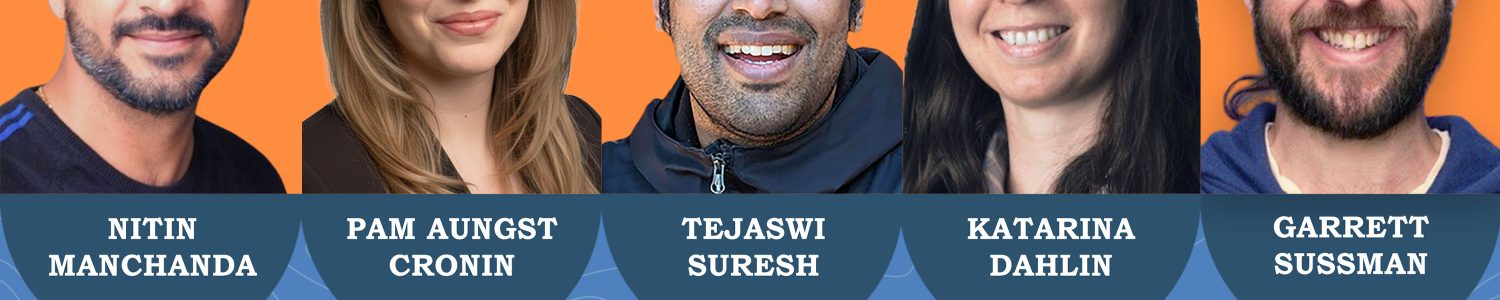
Joining our host David Bain for this live podcast episode will be Nitin Manchanda, Pam Aungst Cronin, Katarina Dahlin, Tejaswi Suresh and Garrett Sussman.
You can also check out part 1 and part 2 in this miniseries on the State of AI in SEO.
Watch the recording
Listen to the Podcast
Transcript
David Bain
The State of AI in SEO, Part Three. Well, hello and welcome to the September 2026 edition of the Majestic SEO Panel. Now, this happens to be the third part in our State of AI in SEO series, an unintended series part of the Majestic SEO Panel.
Now, we did our first episode essentially with these same wonderful panelists back in 2024. We did one in 2025, so I thought, well, we haven’t done one this year. So let’s do something similar this year. So let’s meet those great guests that were also on the previous episode, starting with Garrett.
Garrett Sussman
Hello, I’m Garrett Sussman and I am the director of marketing of iPullRank. Thanks for having me, and great to be back.
David Bain
Thanks so much for joining us again, Garrett. And thank you for joining us, Katarina.
Katarina Dahlin
Thank you, and hello, everyone. Nice to be back. I’m Katarina Dahlin and I’m currently working at WhitePress as well and doing SEO consultancy, and you can find me in all the social media channels.
David Bain
Superb. Also with us today is Pam.
Pam Aungst Cronin
Hi, I’m happy to be back. I’m Pam from PamAnnMarketing and Stealth Search and Analytics, and soon to be a new AI-powered SEO platform Contelevate, but more on that next year. So anyway, thanks for having me back.
David Bain
Superb, and also with us today is Nitin.
Nitin Manchanda
Yeah, thanks for having me. It’s a pleasure to be back here. I’m Nitin, Founder and Chief SEO/AEO/GEO, whatever you call it, consultant, and yeah, looking forward to this conversation.
David Bain
Let’s see how many acronyms we can get in today. Thank you for joining us, Nitin.
David Bain
And last but not least is Tejaswi.
Tejaswi Suresh
Great to be back for the third series. So yeah, so nice to be among all the amazing greats like Gareth, Nitin, Pam, and Katarina, and yourself, David. So yeah, I’m working on some really cool, exciting AI topics on the e-commerce space. So definitely a lot of interesting insights that I’d like to share and learn from you all today.
David Bain
Lovely. Okay, and I’ll stay with you actually in terms of the first question to Tejaswi. Now, what would you say is the biggest change that AI has had on SEO over the past 12 months?
Tejaswi Suresh
I think the largest change has mainly been the mass adoption among all industries across all different verticals. So there’s a deluge of information that might not necessarily be the best always, but so you you end up getting a lot of noise, so trying to swift through the noise, trying to swift through all the latest rapid changes that are going on in the AI landscape, and trying to keep abreast with the best practices is proving to be quite a challenge among the industry folks.
So, getting a better grip of itself, having your first-hand experience in like testing and making sure that you know you can like apply certain knowledges and validate certain hypotheses by yourself is kind of like becoming ever more important. So that’s pretty much where we are we are at at the moment.
David Bain
Lovely. Okay, so let’s try and go in reverse order here that we had initially. So Nitin, what would you say is the biggest change that AI has introduced to SEO over the last 12 months or so?
Nitin Manchanda
I think if we talk about the last 24, maybe 36 months, everyone was talking about AI. But I mean, when it comes to adoption of that, right? People were a bit skeptical. Still, they were talking about SEO first, right? But now, instead of talking about clicks, right, everyone is talking about will my brand be mentioned or cited, right? So they have accepted it. It has become the default KPI and not an add-on KPI anymore.
So yeah, it’s good to see because search behaviour has also changed, and good to see that people are adopting that. They’re also talking about how to rightly measure, you know, the impact of AI that you have on your marketing channels. So yeah, good to see that, and that I think is the biggest and the most positive change I’ve seen in an industry in the last 12 months.
David Bain
Lovely. So we’ll dive into these topics. You know, and starting off with how search behaviour has changed, just in a moment there. But Katarina, what’s your thoughts on that initial question?
Katarina Dahlin
How has search behaviour changed? Well, of course, when everyone starts to use more and more of these AI tools, as you can even see when you search-I don’t know-for travel tips yourself, like you become a bit too lazy even to ask Google, like you go straight to your AI tool, and just you don’t even have time to like look for the answer in Google and search for yourself. So, yeah, I mean, a lot of people are using more and more the AI tools. So I guess, yeah, I guess it’s changing into that direction.
David Bain
Okay, so some people are actually actively using AI to search now. Pam, what has been the biggest change that AI has ended up having on SEO over the last 12 months or so?
Pam Aungst Cronin
So it’s hard to pick one, but Nitin mentioned the measurement aspect, and I think that just as far as my perspective of like what I’m hearing from my clients, what their you know shareholders are kind of pushing them to find out, is more about the measurement and the challenges around the kind of black hole that exists in a lot of these platforms.
We can’t get impressions from ChatGPT or Claude. Thankfully, we can get a little bit of that data out of Google and Bing now, Search Console and Bing Webmaster Tools. But meh, so everyone’s turning to these LLM citation-tracking tools. But the problem with those is you have to think about every question anyone might ever ask, in every way they might ask it.
Now I’ve always I’ve always had a bone to pick with keyword tracking platforms over the years of traditional SEO, because even then, you know it’s too hard to think of every keyword variation. And if you pick just a subset, are you tracking a good statistically significant subset or not? You don’t know. So that’s why you know I always liked looking at all of the queries in like Search Console, where you see everything, and you don’t just pick which ones to track.
But now we’re like back to that spot where like everyone’s like trying to figure out, well, how do I track? The only thing I can do is set up one of these trackers, but then I have to think of every prompt on the planet somebody might use about my topic, and that’s a lot harder thinking about every keyword on your topic. So that has been a big topic of discussion I’m hearing lately.
David Bain
And Garrett, what are your initial thoughts?
Garrett Sussman
Oh man, last is tough. Everyone said all the good stuff, but just to reiterate, first off, like 12 months doesn’t exist, right? Like time is all blended together. I like how Nitin was like, yeah, 24-48, months. But big things are volatility. You know, volatility is the new status quo. The whole idea of any sort of like deterministic top 10 rankings isn’t a thing anymore. I think the whole industry has matured.
As mentioned, the way we frame it, the way we think about the value of AI search, the way that we’re you know trying to approach strategy, everyone has starting to put their plans in place. The other big thing, personalization, I think, has become more significant. I think we’re talking more about agents, even though that’s not a thing yet.
The final thing I would say is just the way that we approach, and this kind of speaks to what Pam was saying, is fan-out queries. The idea that when someone searches, you now think about the 10, 20, 30 related searches that will influence what the output is, and I think that changes our strategy as opposed to a simple keyword focus. So, what hasn’t changed? What has changed? We still don’t have AI modes as the default in Google either, so that hasn’t changed yet.
David Bain
So something that Nitin mentioned is about AI overviews and about traffic as well, and maybe how much organic traffic isn’t actually going through to websites anymore because it’s just staying on the SERP.
So Garrett made a complaint about being last last time. So, Garrett, would you like to start that one off, please? [Laughs]
Garrett Sussman
[Laughs] You’re calling me out? Well, I think you know, going toward thinking about the maturity of our industry and the way that we frame the value of traffic. I think it’s really challenge, even though a lot of it is still messy and ambiguous. Kind of what Pam was saying in terms of how we track everything, tying it to business revenue and understanding that even if traffic is decreasing, people still need to discover and buy products, and so being able to tie your SEO efforts towards the ultimate bottom of the funnel value, I think, has become a more mature focus of a lot of organizations, even though the reality is a lot of us are still figuring it out.
David Bain
Okay, Nitin, I’ll come to you now because you touched on that subject. So what is it about perhaps zero-click results that is becoming more prevalent now, and how does an SEO deal with that?
Nitin Manchanda
So talking about intent, the kind of intent you see in the queries, right? So information intent is totally gone, and for all the right reasons, right? So as a user, you know, I’m very impatient, right? I’m becoming more and more impatient, like every everyone else as well. So if I have a query where I’m expecting some answer, right, and I get the answer which is best mapping my requirements without clicking anywhere, I’m happy.
But when it comes to transactional, we’re not there yet. We’re getting there, of course. I mean, Google recently spoke about universal protocols and agentic workflows as well. I think that’s going to change the game altogether, but for the time being, I think it’s mostly informational intent queries which are impacted. Your transactional is impacted as well, but the clicks you are getting are much more educated, right? So conversion is much better.
We have seen for brands, the traffic drop by 50%, right? Information is almost zero now, but when it comes to conversion, it’s much better. And how we are looking at those numbers, it’s now very different, right? We look at citations, and there was a recent study by Seer Interactive as well, where they mentioned if your brand is cited more, the CTR is much better actually, than the normal case, so I think that was pretty good. We are talking about this, and there was a lot of data that they crunched to publish this report, and I think that is the reality of today.
David Bain
So, Nitin, when you talk about when you do get traffic, you probably get higher quality traffic. Do you mean that because traffic converts better, that the amount of business that a brand gets at the end of the day is probably actually the same pre and post the introduction of of the the expanded overviews on on the on the SERP?
Nitin Manchanda
Yes, absolutely. Because if we talk about what was happening maybe four years back, I was looking at multiple products in multiple tabs. I was comparing. I was checking, you know, like pros and cons all at the same time. But now I use LLM for that, right? It does a job for me. And then I’m like, okay, now I’m convinced. I want this specific product. And then I go to an e-commerce site, for example, I know what I’m getting, right? So I don’t have to spend more time. So even my time on site has decreased, right?
But that is not a bad factor in this case because I am convinced already. I’m educated already, and then I would click and convert. So essentially, the number of clicks this brand is getting, right, for more educated users, and then converting. So essentially, your final KPI, which is revenue, is looking good.
David Bain
Tejaswi, are you seeing certain industries more impacted by this than others?
Tejaswi Suresh
I believe e-commerce industry definitely has seen major strides when it comes to the user behaviour. Like Nitin rightly touched upon, the the type of queries you you you’d get on AI search engines versus Google is is massively different, right? And also, the same query that a user types wouldn’t necessarily be the same way another user would type into ChatGPT, for example. There’s always going to be different variations, and the idea of going towards zero clicks and and eventually into like share of brand mentions and share of voice, along with getting cited, is going to be the new metrics that you that you’ll be looking at, which will ultimately drive your conversions.
Now, one of the reasons why I believe e-commerce has a significant play here is because one is the education side of getting your product aware of. So when you’re looking for a Bluetooth speaker, you might you might prompt in certain key factors like it should have noise canceling, it should be noise canceling, it should have a longer battery life, and and these are some things that you would have to like manually scroll through different pages and try to get the right headphones, or you could you could have in the previous days you could be biased into purchasing a certain product by looking at certain review sites back in the day, but now you you try to get like some sort of a middle ground where you can filter out the noise. The AI gives you like a list of products based on your key factors, and then you get to pick and choose which one you’d like, looking at the pricing as well and the delivery time and so on.
So like Nitin rightly mentioned, if you have all the attributes clearly checked out, surfaced and exposed to AI agents, the likelihood of your conversions doing better is significantly higher than any other e-commerce site that might not have the attributes exposed to AI agents. So I think the definitive industry that is seeing a major impact positively to a greater extent, as well as negatively, if you’re not necessarily playing the game right, is in the e-commerce space because it has a direct impact on your revenue cycle.
The second industry I can think of is obviously the the news side of things. So if you’re getting news articles, for example, from AI agents in order to monetise through subscriptions, there’s definitely going to be an impact on, you know, getting visible. For the right intent for the right audience on the informational space, because it’s just a very competitive market. So, trying to find some sort of middle ground there, where you have to balance your subscription model versus gate-locking your content versus what kind of content you’d want to expose to your users, which has a direct impact on your visibility in AI search engines as well. So I think these two industries have like a lot on their plate to essentially try to solve as you go into this the cycle even more deeper.
David Bain
Brilliant. Okay, thank you, Katarina. Shall we maybe move on slightly? So obviously, we’ve been talking about the industries impacted by what AI has done on the SERP, the expanded overviews, and the effect that this has on clicks. But there’s another opportunity, of course, to optimise your presence within AI search, within AI answers. So, for answer engine optimisation, is this a genuinely new discipline that we have to learn? Is there something different that we have to do here, or are many of the skills that we have for SEO just optimising our existing pages sufficient for this?
Katarina Dahlin
Well, I would say, well, you still need to do SEO and like good SEO because LLMs, they are also like when they are doing real-time searches, they are going into their SERPs and finding pages and finding information. So, if you are ranking there, it’s better chance that you will also be mentioned mentioned in the AI. It’s kind of the same, but then if we go into like the tactics, there are maybe specific tactics that help you get your brand into the LLMs.
As an answer, then like yeah, if you are doing on-page SEO, maybe you get your articles as a source in the LLMs, but if you are focusing more on building your brand on third-party sites and like being in listicles, being outside of your own website, then it’s more likely that you that that AI will pick your brand as an answer.
David Bain
Is there one optimisation tip that you’d like to give with regards to getting into these AI answer engines?
Katarina Dahlin
Well, what I worked with a lot this spring is the off-page side of things. So, working on getting into articles and listicles and taking one query at a time, and just building your off-page authority. It really helps.
David Bain
Pam, how different is answer engine optimisation, and what do SEOs need to learn for that discipline?
Pam Aungst Cronin
Well, I think Katarina just spelled it out kind of perfectly. It’s the off-page part of things, I mean, brand is the new backlink. You have to build a brand, a whole brand, way more, way beyond just getting other reputable and relevant websites to link to yours. That still very much matters.
As Katarina pointed out, the LLMs are just searching Google and Bing for you for the most part, so all the traditional SEO stuff still matters. It’s just kind of been reweighted, I guess I would say. Content structure, you know, proper H tag structure and stuff has gone from it used to matter to oh it was a thing in the past to now it matters again because machine readability and machine digestibility certainly helps. So anything that’s good for ADA compliance is good for LLM compliance or compliance, but you know, LLM optimization.
It’s just the efforts to build the brand as a whole, get people talking about the brand; these LLMs are engineered to trace information back to an original source, and they like human original sources. Everyone complains about how much Reddit gets exposure in these things, but think about it. It’s humans talking about brands and actual experiences that we have experienced and that they had with the brand, and so getting that talking going on. Yes, getting other publications to to mention you, of course, but really, truly getting brand strength growing, getting actual people talking about your brand is online is so, so crucial now.
So I don’t think that anything has dramatically changed per se, but things got reweighted, and I guess from a client’s perspective, I guess I do. They feel like a lot has changed because they have to look at building the brand more holistically than ever before for SEO/AEO purposes, not just for branding purposes. Like they’ve kind of merged.
All of that is to say, if you already do have a strong brand, you’re probably positioned pretty well, especially in a strong e-commerce brand. All the things that we were just talking about before about the research that goes into the product of chatting with the LLM and the kind of pre-research does increase the conversion rate, but also like one very well-established household name brand client that we have, they are experiencing now I guess what I’ll call zero-click conversions because they launched Shopify’s UCP Universal Commerce Protocol that allows LLMs like ChatGPT to just place an order for a client, and I was shocked at how much it’s already being used by users. They’re purchasing products through LLMs like zero click to the website.
Obviously, it’s a small fraction of their entire conversions, but I was really like shocked, like wow, this many people are purchasing products by saying, “Hey, ChatGPT, purchase that product for me”. Done, zero-click conversion. So, anyway, I was kind of all over the place there, but there’s some thoughts on all of that.
David Bain
All over the place is good sometimes as well. But maybe we can get Garrett to define something a little bit more. Or what I was thinking, Garrett, there are lots of different LLMs. You know, ChatGPT, Perplexity, Gemini, Claude, you’ve got loads of different opportunities to optimize for. Are you seeing any different requirements for different LLMs, or do we just simply have the have to have the right things in place for all of them?
Garrett Sussman
So I would say they all have nuances to them. They all have the big considerations, which is what Pam and everyone was touching on. It’s like, what is the index they’re pulling from? So we want to know are they going to Google as their source of index in terms of being recommended rankings. That’s not just purely based on the training data. That’s the the biggest distinction for me. Is like we still have a lot of queries or searches that doesn’t necessarily go out to the internet and just makes a decision based on what the LLM has been trained on.
The next level of that is called Retrieval Augmented Generation, which is when it does go out and goes to Google’s index or Bing’s index, or you know, supposedly, allegedly, OpenAI is building their own index, which at some point could throw a whole other wrench in our gears. How that, how those are feeded into the output. I think matters. There’s nuance there.
I think in terms of personalization, memory matters. So the way that Gemini takes your history, your search history, any information that you fed it, and incorporates that into the answers is going to be slightly different than the way that ChatGPT does it. Then ultimately, when it does go directly to your site, there’s always been a lot of conversations about JavaScript rendering, the extent to which it understands the actual content on your website, and so there are nuances there.
When it comes to e-commerce, the different feeds that it pulls in, you know, there’s been a lot of talk about OpenAI’s feed that came out. I guess it’s like six months ago, maybe longer. Time is a flat circle, but the idea of where it’s getting its product source information is going to be different.
So, to answer your question, there are a lot of fundamentals that are similar, but there’s definitely nuances platform to platform, and depending on your industry and your business, that might influence your strategy a little bit or significantly platform to platform.
David Bain
Nitin, back in the earlier days of SEO, there were many sources of traffic in terms of search engines. Then it all seemed to funnel into Google at one stage, and depending on where in the world you were, perhaps up to 96% or so of traffic just came from Google. Now it seems to be diversifying again.
How much traffic is actually obtainable from these AI search engines? Have you got any thoughts on percentages or figures of traffic that certain industries are actually receiving from AI at the moment?
Nitin Manchanda
Well, I don’t have any percentages because it varies a lot from industry to industry, and even within the industry, if you talk about different LLMs you would see huge variance when it comes to a certain type of industry versus you know the other one. So I think what’s important is you cannot just look at one LLM, right? So if you look at all these AI visibility trackers like Peec, the one that we’re using right now, you would also see that they’re also giving you options to check for Gemini, ChatGPT, Perplexity, and all of that, and when you see the numbers there, they vary completely as if you know it’s a different game altogether for different LLMs, right?
So personalisation definitely plays a huge role, but there are so many other factors which influence the kind of results you’re getting, and they’re changing at a very fast pace. So you cannot just look at one LLM, you have to look at all of them. I think talking about KPIs like you know share of model, right, and share of you know the whether how much traffic you’re getting from search engines versus LLM. So you have to look at all of that and you have to keep an eye on those numbers. You cannot just ignore some of that because the industry is changing. The way people are adopting these tools, it’s changing a lot. I’ve seen like a lot of AI experts, so today they would say, “Hey, you know, Claude, for example, launched Fable. I’m never going back to any other LLM”. Tomorrow they would say, “Hey, you know, OpenAI launched a new model. I’m not going back to Claude anymore”. So it’s changing a lot the way people are using the users use are using these tools and how they are using for different use cases.
I use different LLMs for different use cases, right? For my personal, I have a different one. For professional, I use Claude for almost everything, right? So I have different use cases, and they work great for those use cases. But for others, right? It’s not standard. For others, the mix might look a bit different, but they would also have different elements for different use cases. So I think you need to keep an eye on all of those trackers, and it’s very important to understand the kind of traffic you’re generating. So understanding that attribution is very, very important.
David Bain
So that’s AI in relation to appearing in search. Pam, I believe you touched on expertise. So shall we maybe talk a little bit on about EEAT and perhaps the abundance of content that can be created from AI and how to differentiate what you do based upon EEAT and other means?
Pam Aungst Cronin
Oh, I can talk more than a little bit about this, but I’ll try to keep it to a little. So, the EEAT acronym that we’ve been told by Google is a guideline for the content we should create for a long time is Expertise, Authoritativeness, and Trustworthiness. Around the time of, I think it was-I don’t remember exactly.
It was about the same time that ChatGPT came out that Google announced their new Quality Rater Guidelines. It was very close point in time, and the new Quality Rater guidelines. Well, first of all, when they announced them, they explained that you know what they added was this new E, which is experience. So they even gave an example of like when you’re reading content, like is this person talking about an experience that they had with a product, with a service, with a place that they went to?
And then I tried counting, but I lost count of how many different references to experience they added to the quality rater guidelines. I stopped at like 40 something. I was like, “All right, I made my point. It’s all over the place in there”. They really want you talking about your real world, firsthand human experiences that led to you getting your EEAT, your expertise, authoritativeness, and trustworthiness. So, where were you like back in the past? How did you start? Where did you learn? What case studies, decision points that you came to in a project or in a career? Just anything that you can use to ground what you’re saying in your own reality is really what they want you to be doing.
And honestly, like I said before, it’s how LLMs work anyway. So Garrett mentions some of the technical terms like pulling from memory or using RAG. When they use RAG to go out to the web and pull like more recent information than their memory, it’s also called grounding. So they’re trying to ground what they’re saying. You know they’re like, well, I kind of know this from my memory, but let me go and get the latest and greatest proof of it and ground what I’m saying. We need to ground everything we say now.
It is all too easy for the internet to just get firehosed with bland, generic AI slop regurgitations of other AI slop articles all day, every day. That is just the majority of what’s going to be hitting the internet. But the way you’re going to stand out again, reference Reddit. People get annoyed how much Reddit gets ranked and cited, but it’s humans talking about their E, their experiences. So you can even you can use AI to outline the bones of an article and make sure you cover the topic comprehensively. But make sure you’re putting I call I’m calling it that Vitamin E on there. Sprinkle that Vitamin E in there. Talk about how you personally or your team, it’s trickier with a brand, but still your team, your brand, how you as a person, whatever. How, where, when, what did what did you learn, and how where did you get it from? What experiences did you get it from? So we need to ground everything we say in that.
David Bain
Superb. So we’ll have a further discussion about EEAT and how you can demonstrate that within your content to hopefully better surface your content within LLMs. But I’d also like to touch on technical SEO for AI. So Tejaswi and Katarina, I’ll give you both the options of which of those topics to major on next, so to Tejaswi, would you like to talk about technical SEO for AI, or expand further on eat for your content for AI?
Tejaswi Suresh
All right. I’ll choose technical SEO because that’s something that I love doing. So I think if you’re talking about AI in the context of technical SEO, the biggest foundational aspect of it is still how you do your basic SEO, right? So you don’t have to do anything special other than what you already do on your foundational SEO. The biggest example is having the content exposed for AI agents.
AI agents obviously don’t render JavaScript, so having like for example a Markdown file available for the content that that that you have present would significantly help you get your content indexed, surfaced, and available to be cited on AI search engines. That would be like a very foundational thing.
The second is obviously internal linking. Again, this is very basic to what we’ve been doing in SEO for like decades, and nothing really changes on that front. And internal linkings, at the end of the day, helps build relationships between one page entity to another page entity, and helps drive the value of that relationship.
This is especially useful when it comes to the e-commerce side of things, because you have a lot of products that complement each other when you purchase something, right? So if you’re talking if you talk about like a like a like a gaming computer, for example, you have keyboards, you have gaming mouse, you have headsets, and you know you have all these complementary products, which makes sense to purchase as a package as a whole. And this is where AI engines are super super helpful in helping you choose those complementary products, and all of this boils down to again the foundational SEO, wherein you have good internal linking, your content is easily available to be indexed, and all of the entity relationships are easily available to be discovered by AI agents.
So at the end of the day, when we want our websites, our applications to be you know fully aware for AI engines, you don’t have to do anything special or anything different than than what you’ve already been doing for the last couple of years. Everything still holds true, even going forward as well, purely from a technical SEO perspective.
David Bain
Thank you so much. So we’re going to go to Katarina in just a second. Garrett, just to give you a heads up, just after Katarina, can you have a little think about any AI tools that you recommend, and also maybe where they fall short and where humans need to jump in, and you can’t necessarily just rely on AI tools?
In the meantime, Katarina, what are your further thoughts on using EEAT in your content to help ensure you get featured rather than someone else?
Katarina Dahlin
Yes. So what I have been doing quite a lot lately is I love YouTube videos. I love making them and adding them to your content. And for example, when I’m optimising my own website, often I just go and sit in front of the camera and like do the YouTube video first and like just speak what I want to speak, and then I kind of get the like unique things there as well. And then I take the YouTube video, I take the transcript, and like then I use AI to like create an article about this.
So this way, I kind of get maybe more uniqueness to it. And then, of course, I also published a video on YouTube and on social media, and just connected everything together. And yeah, it’s my face, it’s me talking, and like, I guess AI can copy that, but it’s a bit more EEAT in that sense as well.
David Bain
And you are obviously creating the YouTube video from scratch and not using AI to do that?
Katarina Dahlin
I use myself, I’m not using AI.
David Bain
Yeah, I think that’s the way to do it. I think a lot of people start with video or audio and have a great high-quality discussion, and then it’s I think it’s more legitimate. It’d be interesting to hear everyone’s perspectives on that, but my opinion is it’s more legitimate than to go ahead and use AI to create further content from there because the original piece is original thought leadership and having not used AI, I think I’m looking for nods. I think Nitin’s nodding away gently. Do you agree with that, Nitin?
Nitin Manchanda
Oh yes, 100% I think yeah, AI is an enabler, right? It supports, and it basically is your efficiency weapon. But I think yeah, you know, like owning the real data set to you know, like get the right outcome that helps your user, and not only to fool search engines. You cannot do that anymore, right? And yeah, so I think it’s basically about owning it. And when you’re thinking about writing anything on a website or serving any experience, you’re always thinking about the user first, right? And that was always important, but now it’s more important than ever before.
David Bain
Garrett, let’s get your thoughts on AI tools and where it’s necessary for a human to jump in and not necessarily just rely on an AI tool.
Garrett Sussman
Yeah. So, so I think the theme of this entire conversation, right, is around context and thinking about you know, when we’re talking AI tools, there are so many out there. Are we talking AI tools in the context of tracking performance in AI platforms? Are we talking about using AI tools to produce content? Are we using AI tools throughout our different workflows? And so I feel that AI tools are super valuable in the sense of I think it is.
I’m gonna get some backlash for this, but I think if you are an SEO, if you are a marketer, it is irresponsible at this point in time to reject AI completely. I think you need to leverage AI in some capacity in your job, whether it’s you know finding efficiencies through your workflows, doing automated tasks that manually might take you a really long time, or tasks that don’t require human thought or insight. Like it is data entry, it is mechanical. It does not need a person wasting their time on it.
When it comes to the different tools, I think Nitin called it out as well. I think different tools are useful for different use cases. I know on a personal level, I am much more dependent on ChatGPT for writing and creating quality content, and that’s not something I would have Claude do at this point. But I love Claude’s interface for Harness, for, you know, tying together different MCPs, working with data, and being able to talk to my data more effectively in a cloud ecosystem.
When it comes to track prompt tracking, I think the person using the tool matters more than the tool itself, because a lot of these tools overlap in the strategies for what you’re tracking. I think there’s a needs to be an expectation whether you’re talking about Profound or Peec or any of these tools, of it’s not necessarily accurate and precise in the sense that because it’s probabilistic, you’re not getting the definitive rankings, and rankings are out the door anyway. So you need to approach those tools from a mentality of: Am I trending in the right direction as I experiment? Am I going up and to the right as best I can?
Because the other big thing, which I think has been a theme throughout this conversation, is you can’t put all your eggs in one basket. You can’t depend only on your website. You can’t only depend on Reddit. You can’t only depend on LinkedIn. You can’t only depend on third-party listicles because everything’s volatile and changing. Six months ago, on LinkedIn, you know, Pulse was all in. You know, even a week ago, Reddit was everywhere, and now it’s declining in certain circumstances. But there’s still value in being on Reddit because it’s still in the training data.
So I don’t know if this answers your question, David, because I think which AI tools is a very big question right now. But I think it depends a lot on what you’re trying to achieve, experimenting and making investing the time to make the different AI tools work for you for that specific use case.
David Bain
I was interested in your recommendation of ChatGPT over Claude for writing. Why is that?
Garrett Sussman
I don’t know if it’s definitively because of how I set it up, but I would say I personally have invested more time in building out my personalisation of CHatGPT so that when I give it feedback and the type of writing that I want, it gets much closer to my expectations. Whereas Claude, even if I have a certain markdown file with like this is how I talk or this is how my brand talks or this is how I wanted to talk like this, I feel like Claude and a lot of times in in in a if like a price conscious model because it’s like you know I’m not going to go and use Fable for you know writing a blog post at the sonnet level or the opus level I think the quality of the writing just doesn’t match my expectations whereas with ChatGPT on the paid, you know, Pro or Plus, excuse me, has been a lot closer to what my expectations are.
One thing I want to call out from earlier, real quick, is just with models, we have to consider the cost, the free version versus the paid version. With all these results, I know this is back to the early part of the conversation, but everything we’re talking about with SEO really depends not only on the different platforms but the chosen models within the platforms.
David Bain
Does anyone actually agree with what Garrett was saying with regards to ChatGPT over Claude for written content?
Tejaswi Suresh
I would definitely resonate with that statement purely because of what I’m building with my team personally, when we want to like build up brand tonality, as well as build up a persona, and you want that voice to reflect it, ChatGPT seems to do a pretty good job, but when it comes to actually building certain complex solutions or tackling complex topics, Claude is far more superior than ChatGPT can even can even get close to, so I think there’s that level of differentiation as to like how you choose a specific model for a specific reason.
I think when it comes to educational content, Gemini also does a much better job than it did a couple of months ago. So yeah, I tend to agree with what Garrett said. I think on the writing level, ChatGPT definitely resonates quite well with the way you speak, and it kind of like reflects your persona over time as it learns more about you and your traits and so on.
David Bain
Just before we have a final question, I’d like to again throw this next question out to the panel as a whole just to see who it’s most relevant to, because it. I just want to talk about. I just want to touch upon recruitment. So recruiting SEOs and the skills that you’re looking for, and maybe how AI has changed, perhaps the level of SEO you’re looking for or the skill set that you’re looking for. So, how has recruiting an SEO executive, an SEO manager, changed in terms of the skill set that you’re looking for nowadays versus perhaps four years ago?
Tejaswi Suresh
I’m totally looking for Nitin’s thoughts on this because he’s been on a massive recruiting drive.
Nitin Manchanda
Yeah, I can definitely share my thoughts. So I was always, from day zero when I started Botpresso, I was always looking for problem solvers first, and then other skills, right? And I think that has not changed. I was always looking for people who can recognize patterns, think about efficiency, think about solving not just for one case but solving once and for all, right?
So for me, I think nothing major has changed, right? And I’m also open, you know, when someone is like they prefer using any LLM while even answering the questions I’m asking, right? I’m totally okay with that because for me, what’s important is how they’re trying to solve the problem, right? How they’re thinking about efficiency, how they’re thinking about, you know, like solving it once and for all-that’s that’s very important for me, and it’s not recent. It’s always the case, so I think nothing majorly changed for me.
David Bain
Anyone want to jump in on that one?
Garrett Sussman
Yeah, I’ll jump in. I think I agree with Nitin for the most part. The one thing is I think you need to explicitly test their AI comfort levels depending on your brand. For me, at iPullRank, we are moving towards 100% a native AI agency. So you know you need to be a critical problem solver. You need to be skeptical that the tools that you’re using are definitively giving you the right answer. You need to fairly second guess AI, but you also need to be completely comfortable in an AI environment, and that plays into our recruiting.
I don’t think you can BS it in the sense of if you are a basic AI user where you’re just letting the tools think for you. That’s really problematic. So a lot of the way that we test is: Do you have the agency to build with AI? Because AI should augment your intelligence. It should make you a better thinker, a better worker, more curious. But a lot of people don’t have that. I think they look at AI as an easy button, and so you really need to drill into that in recruiting. But it’s a critical skill set.
David Bain
So we started this discussion by asking our panelists what’s the major thing that has impacted SEO over the over the last 12 months or so. I’d like to close up by asking the question: What will be the biggest change that AI will have in SEO over the coming 12 months? And then just get each panelist to remind the viewer, the listener, who they are and where they can find them.
So let’s start off with Nitin: what’s the biggest change we’re likely to see from AI on SEO over the coming 12 months? And please just remind the viewer where they can find you.
Nitin Manchanda
Yeah, well, I mentioned like in last 12, 24, 36 months, people are now more concerned about will AI cite me or mention me. In the next 24 months, probably I am looking at a pattern where we would start asking, will AI choose me? Right. So right now, you would see probably five different options, say you’re looking for headphones. These are five different options you have. But then, I think the the pattern is changing, where you’re giving more and more specifics, and you’re looking for just one answer, right? So I think this is where the trend is going, and that is the biggest change I’m anticipating in the next 12-24 months.
You can find me on LinkedIn or Twitter. I’m more active on LinkedIn, so that would be the right platform. Thank you so much, David, for having me once again.
David Bain
Thanks so much for joining. And to Tejaswi, what are your thoughts on what additional changes we’re going to see as a result of AI on the SEO landscape over the coming 12 months or so, and where can people find you?
Tejaswi Suresh
I think the agent traffic on the internet is going to grow exponentially over the next 12 to 24 months, and that’s just going to be quite rapid. And we as web folks would have to just accommodate that idea that an AI agent would visit a website, would make the right calls. If you have like an MCP server, for example, and you have all the tool functions available for an AI agent, you should definitely expect AI agents to be making a lot more actions, triggering a lot more functions.
And the second thing is, I think two industries would definitely be impacted the most. One would be e-commerce, and the second would be the news publishing side. And on the e-commerce side, for all the merchants that are you know on Shopify, on WooCommerce, on many other different platforms, making sure that your products, your catalogue, is fully indexed, discoverable by AI agents. AI agents is going to be foundational and key for driving your revenue and discoverability over time. And then, when it comes to the news cycle side of things, it’s like how fast can your index can your news sites articles get picked up? How rapidly can you spin out articles for AI agents to consume and present those topics is going to be super key to how things evolve, and and and the final thing is the transacts actability.
So you will have AI agents, like Pam mentioned, make money transactions on the internet in a couple of seconds across different sites. So, making sure that your website and your you know application, if it is indeed selling something that’s of a physical nature or of a virtual service, making sure that it’s fully accessible by an agent, can transact using USDC or any of the protocols like 402 that are being supported by Cloudflare, Google, and so on. All this would be super key in making sure that you are at the forefront of being discovered and fully engaged with AI traffic as it grows exponentially.
You can find me on Twitter. I’m pushing Twitter mainly because I have a premium subscription and there’s barely any engagement there. So that would be my gamertag, which is WolfNuker. So look me up, or on LinkedIn is just PSEO, like programmatic SEO. So it’s just PSEO. So you can find me there as well.
David Bain
Superb, Katarina. What are your thoughts on the final question? Where can people find you?
Katarina Dahlin
Well, yeah, yeah, good answers so far. I agree with those. It’s a very difficult difficult question, but one thing I want to highlight is both when clients and SEO people start using more and more AI tools and AI agents, I think it will become more important from the client side to have like a good SEO person, they can actually ask for their opinion and think together with them on decisions and like actually have a real person to to discuss with in all this like AI agent era kinda. So I think that’s gonna be important, and you can find me on LinkedIn and Instagram.
David Bain
Superb! Thanks so much for joining, and let’s move on to Pam. Pam, what are your thoughts on further impact that AI can have in SEO over the 12 months, and where can people find you?
Pam Aungst Cronin
Agentic for sure. I agree, 100,000%. Like I said before, the zero-click conversion. I know the agentic versus generative gets confusing to people, so think of it as the zero-click conversion. You know, we are getting towards a zero-click world here, and we’re gonna get towards the zero website world, I think, eventually. But you know, what should be top of mind for brands is MCP and UCP. If you’re e-commerce, get UCP set up now. I can’t believe how much is being used already. How many people are purchasing products by saying, “Hey, ChatGPT or whoever, but mostly ChatGPT, purchase it for me”. Like they did their research and they tell them to do the purchase. It’s happening already, so you’re already late. So hurry up.
And on the B2B/services side of things: MCP. Make your website interactive, and you’re gonna have to get a little creative here. It’s not as straightforward as feeding your products and your cart capability to an LLM. It’s gonna be more creative on how to help people interact with your brand by giving the LLM direct access to the data about your brand and your service without the e-commerce aspect.
But I did have, I can’t remember which one, I had one of the LLMs ask me the other day about a service, a local service company. I was asking about. They’re like, “Would you like me to fill out your their contact form for you?” It probably wouldn’t have worked if they don’t have an actual MCP. But even if you’re B2B/Services, you should have an MCP on your website by this time next year. You probably have a little more time than the e-commerce industry has, but by this time next year, definitely.
Lastly, I’ll say that for the news industry, our editorial clients have been hit the hardest by all of this. Sadly, they are having to get creative. These specific clients aren’t really paywall-type. They really just made a lot of revenue off of traditional banner ads and manually sold ads. They’re having to get creative. They’re making money in new ways. They’re selling merchandise. They’re signing up for affiliate marketing links that you know they can earn a little commission on when some when they talk about a product and send it elsewhere. They’re doing like subscription content beyond the traditional paywall. So unfortunately, for the editorial world, is going well for all of them. You’re going to have to get creative for all of them, but for that one especially, think hard about maybe what other ways you might be able to make money if you’re in the editorial space other than traditional advertising. Everything is changing.
So, all that said, if you want to hear more from me, you can find me on all the socials except X, since we gave up on that one. All the rest of them, you can find me at either Pam Aungst Cronin or PamAnnMarketing.
David Bain
Superb! Thanks so much, Pam. And last but not least, we’ve got Garrett.
Garrett Sussman
I’ll go a different route. Going more humanistic, I think hyper-personalization will continue to be really critical, and I’ll come at that from a couple of angles, one is you know historically we all got taught keyword like we just use one to two keywords to get what we found. Well, natural language has been a thing for 10 to 15 years, and people are getting much more comfortable just talking in questions and talking like a human and adding much more context to their searches.
Sundar Pichai at Google said AI is additive. I think that’s absolutely the case in the way that people are understanding. They can ask so many more things. So all that is going to result in a much more personalized answer because people are giving more explicit context in what they’re searching for. The other side of it is the implicit context. We’re going to continue to see much more of your personal data. Included in the output, we know Google Personal Intelligence includes Gmail, includes Calendar, includes your photos. We know that ChatGPT pulls from all that. When Apple has its partnership with Google to you know give steroids to Siri, and that’ll have access to all your personal messages and everything.
Everything is going to become so much more hyper-personalised in a search capacity, and I think that should significantly impact your strategy. But it will also become something that we as consumers are going to become much more comfortable with using. And you know, you think about you know in the ’90s when people started to get comfortable putting their credit card information online, and that was different. AI is having that sort of renaissance right now, and it’s just you know so much faster.
So find me on LinkedIn and on X, but mainly LinkedIn.
David Bain
What a wonderful panel! What a lot to think about. Hopefully, we can get them on again in 2027 for part four.
I’ve been your host, David Bain, and you’ve been listening to the Majestic SEO panel. If you want to join us live next time, sign up at majestic.com/webinars, and of course check out SEOin2026.com too.
Previous Episodes
Follow our Twitter/X (@Majestic) and Bluesky (@majestic.com) accounts to hear about more upcoming episodes!
Or if you want to catch up with all of our previous episodes, check out the full list of our Majestic SEO Podcast episodes.
- Are you using AI the WRONG way in SEO? - September 23, 2026
- The State of AI in SEO (Part 3) - August 24, 2026
- How To Deal With Fake DMCAs - July 29, 2026